Hans Kung Quotes
Time and again we see leaders and members of religions incite aggression, fanaticism, hate, and xenophobia - even inspire and legitimate violent and bloody conflicts.
Küng, Hans. "Declaration Toward a Global Ethic." A Global Ethic: The Declaration of the Parliament of the World's Religions, edited by Hans Küng and Karl-Josef Kuschel, Continuum, 1993, p. 19.


Pandita Indrani Rampersad. She is the first Hindu woman who ever became a pundit—a religious expert who guides Hindus. She is also a professor in the United States.


Refers to a system of plural wives


Most Muslims believe that Islam is a religion of peace. A small minority of fanatic extremists believe as Al-Buti does. They are the ones who are the most dangerous for all.


During her adult life, she was the de facto ruler of China. Officials then did little or nothing to curb the attacks on the various foreigners and foreign power that occupied and exercised some control over parts of China. The Government itself could do little as it was too weak militarily with many key officials bribed by the foreign powers. The Boxers were a grass roots xenophobic movement devoted to getting the foreign powers out of China by violence.

Sirhindi is a very important Muslim Imam and is credited with breathing new life and energy into the 2nd millennium of Islam. An irony of this quotation is that Sufi’s are often characterized as “moderate” Muslims. The quotation is extremely important in that there are some who attribute the anti-Semitism of the Muslims to the dispute over the State of Israel. However, it was the anti-Semitism that caused the problems with Israel. This quotation is from the 17th century—more than 300 years before Israel was established and over 200 years before the Zionist movement even thought about recovering Palestine for the Jews. Islamic anti-Semitism and anti-Christianity began in the Prophet’s lifetime and continued thereafter. It is as vicious today as it was 500 years ago, except for the fact that there is now an Islamic Reformation that despite the Koran’s statements regarding non-believers, they have a more modern view of the world and the people within it. Islamic cultures like Indonesia and Turkey do not have the same degree of anti-Semitism as Pakistan and the Arab Countries.

A publicity seeking fundamentalist Christian minister in Florida had publicly burned a Koran to the moral condemnation of the President and most other government leaders, as well as clergy of all faiths. However, after the President of Afghanistan condemned the act, there were attacks on a United Nations compound in that country and a number of innocent people were killed and two beheaded. Yet most Muslim clerics were reluctant to morally condemn the murders while they were vociferous in castigating the Koran burning. Some were intimidated and feared that they would be attacked if they criticized the Islamic fundamentalism that advocated the murders and terrorism.

Like Protestantism, there are different sects of Judaism but not so many. The Reform Jews are the most modern Jewish religious group. Reform Judaism originated in France and developed in America in the 19th century, and most American Jews belong to this branch of Judaism. In Israel, the Reform Jews are a minority like the ultra-Orthodox of which this Rabbi was a leader. He was the head of the ultra-Orthodox Shas political party which often has substantial political power when the two major parties do not have enough votes to make a majority and they need Shas as a coalition partner. This minor party often has a great deal of political influence. Religiously however, Shas speaks for a small minority of Israelis. However, they and some other ultra-Orthodox have been able to control or be very influential with the Israeli Ministry of Religion and they have used this power to not give Reform Judaism any official recognition. Reform Rabbis—which include women—are not officially recognized in Israel and so far as this Rabbi and many of his followers are concerned, Reform Judaism is a great danger to Jews and Israel. The hatred, as in this quotation, for the Reform Jews, is greater than any animosity for the Arabs. In actuality, this rabbi and his followers, are culturally and religiously very much like the Muslims. As Sephardic Jews, they have grown up in the Middle East and before Israel’s founding, they lived in Islamic counties and absorbed much of their culture. Like ultra-orthodox Muslims, they believe in theocracy and oppose democracy. They oppose religious freedom, and oppose civil law and civil courts in favor of religious law and Rabbinical courts. See {637098} for their hostility to the Supreme Court. The friction between the secular, Reform and most Jews in Israel and the ultra-Orthodox simmers just below the surface and breaks out every so often, but the pressure to refrain from major political strife is great lest there not be enough of a united front to protect the Jewish people from the extremists in the Middle East who want to nullify the Israeli state by force and would threaten the very lives of Jewish people.


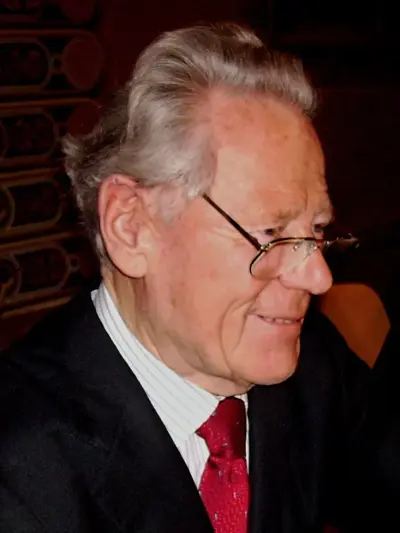
Hans Küng was a Swiss Catholic priest, theologian, and author. From 1995 he was president of the Foundation for a Global Ethic (Stiftung Weltethos).
