Dave Barry Quotes
Thus the white men and Native Americans were able, through the spirit of goodwill and compromise, to reach the first in what would become a long series of mutually beneficial, breached agreements that enabled the two cultures to coexist peacefully for stretches of twenty and sometimes even thirty days, after which it was usually necessary to negotiate new agreements that would be even more mutual and beneficial, until eventually the Native Americans were able to perceive the vast mutual benefits of living in rock-strewn sectors of South Dakota.
Barry, Dave. Dave Barry Sleeps Here: A Sort of History of the United States. Random House, 1989, p. 45.

Not all Indians resented the coming of the white man. Several of the more peaceable tribes benefiting by interactions with the United States and some even sought affiliation—especially the military weaker tribes which would be protected by an alliance with the Americans.


He had just returned from a trip abroad.


President Thomas Jefferson and the Congress worked at making a workable set of relationships with the Indians. Here Congress gave Jefferson a fund so that he could invite influential Indian leaders to Washington and give them presents. The hope was that the Indian leaders would see the achievements of white society and then work to transform their people to this more desirable way of life. While this was a good strategy with a few Indian nations, the reaction of most Indian leaders was being very impressed but not really wanting to trade their existing lifestyle, customs and values for the undeniable advantages that American society could bring. Both the white and Indian leadership miscalculated, Jefferson believed that as soon as the Indian leaders could examine the two alternative societies, they would clearly choose to change. The Indians were so impressed with the sincerity, reasonableness, and friendliness that the white leadership exhibited, that the Indians did not realize that a large part of white society was different from the leadership and that the leaders spoke for and could control the other whites.

2nd Viscount Melbourne. The “American treaty” was the Webster–Ashburton Treaty to adjust the final borders between Canada and the United States that were still in dispute from the War of 1812. Note that the British Prime Minister was critical of the position that was being taken be some British diplomats. In many American negotiations with Russia and others, there are hard liners who believe that the negotiators want too much to preserve peace and are not sufficiently willing to go to war for the nation’s principles and honor. As this quotation shows, this is not just an American phenomenon, but in almost all nations there are hard liners critical of all international negotiations and fearing that a desire for an agreement will undermine the positions that should be taken. This is an example where the hard liners were on the non American side.


See {641838} for a quote about the policies that she came to regret.

Although, on sever occasions Mao tried to reach out to the United States, the fact that he was leading a communist movement and Chiang Kai-shek, our recognized ruler of China hated Mao caused his overtures to be rebuffed. American military leaders knew very little about China and our intelligence was almost non-existent. They assumed that he was under the control of Russia and Joseph Stalin when in fact, the Russians wanted to oust Mao for not following Stalin’s communist orthodoxy. They succeeded in firing him as head of the party and replacing him with a committee of more loyal communists. Not only did the US rebuff Mau’s outreach attempts, but American money and military material financed 6 different military campaigns by Chiang to exterminate Mao and his communists.
None succeeded as the vast majority of the peasants supported Mao and his troops and provided support and information in Chiang’s attempts. Some historians believe we “bet on the wrong horse”.

At the time of this quotation, he was the President of the America-Mexico Chamger of Commerce and his Mexican members were very anxious or disturbed by the prospect of Donald Trump being sworn in as President. Trump, during his presidential campaign, had courted many of the anti Hispanic voters and organizations, had labeled Mexican immigrants as "criminals" and "rapists", and had promised to build a very high wall accross the Mexican U. S, border and "make the Mexican's pay for it." Zapanta was also under consideration by President Elect Trump as the U. S. Ambassador to Mexico. These words were particualy well and delicately chosen to try and maintain his staning with with Trump and the Mexican leadership.


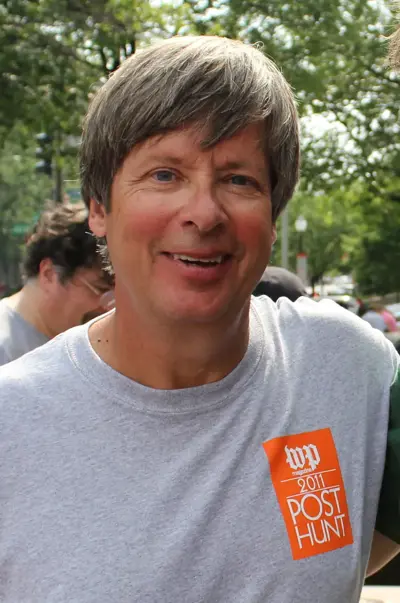
David McAlister Barry is an American author and columnist who wrote a nationally syndicated humor column for the Miami Herald from 1983 to 2005. He has also written numerous books of humor and parody, as well as comic novels. Barry's honors include the Pulitzer Prize for Commentary (1988) and the Walter Cronkite Award for Excellence in Journalism (2005).
