Lord Acton Quotes
Though oppression may give rise to violent and repeated outbreaks, like the convulsions of a man in pain, it cannot mature a settled purpose and plan of regeneration, unless a new notion of happiness is joined to the sense of present evil.
Acton, John Emerich Edward Dalberg. "The History of Freedom in Christianity." The History of Freedom and Other Essays, Macmillan and Co., 1907, p. 34.


The veiled threat of violence and disruption was a tactic that did not work.


This quotation is used by the moderate Egyptians and other moderate Arab leaders as well as Israelis and other experts in combating Islamic Fundamentalism to illustrate the thinking process of the Muslim fundamentalist terrorist leader. They are more than willing to sacrifice those they lead (though rarely themselves) if they think that something is to be gained. But if there is nothing to be gained, their “moral” responsibility requires not “wasting” their followers’ lives. Therefore, the way these experts believe they should deal with the radicals is to face them with overwhelming force (a variant of the Powell Doctrine) and never concede anything or let them gain anything from violence. A single concession makes the terrorism, sacrifice and violence worthwhile, but if there is no gain, the leader has wasted the lives of his followers and is less likely to initiate another attack.
See Thomas Jefferson: {605051} for a somewhat similar notion.


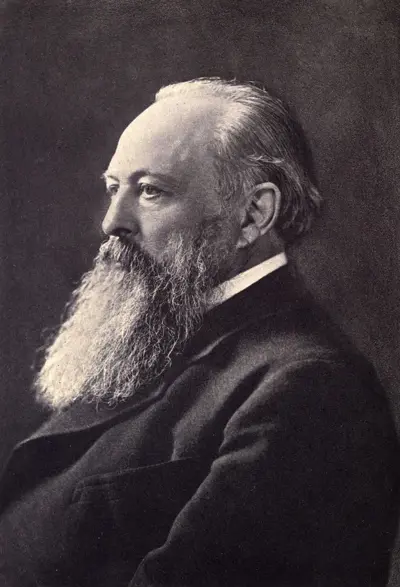
John Emerich Edward Dalberg-Acton, 1st Baron Acton, 13th Marquess of Groppoli, better known as Lord Acton, was an English Catholic historian, politician, and writer. He was the only son of Sir Ferdinand Dalberg-Acton, 7th Baronet, and a grandson of the Neapolitan admiral and prime minister Sir John Acton, 6th Baronet. Between 1837 and 1869 he was known as Sir John Dalberg-Acton, 8th Baronet.
