Frederick the Great Quotes
those who are considered clerics, grown fat on the alms of princes, now oppress princes' sons....
Frederick II Hohenstaufen
Frederick II, 1194-1250, German King and Holy Roman Emperor, Letter to the kings of Christendom, 1246
Sourced by: Eigen's Political and Historical Quotations

Ingersoll was considered to be the greatest orator and political thinker of his day, but his overt atheistic views curtailed his elected political career.


Ceremonialists refer to Roman Catholics.
Some of the founding fathers were deeply religious men while others were not so. Some varied in their believes at different times of their lives, and a number were not very favorable towards orthodox religion. At the time, Roman Catholic and Protestant churches were persecuting other religions throughout Europe and people were still being killed for their heretical beliefs. Most important to some of them, kings and other monarchs whom they abhorred, all at the time claimed the Divine Right of Kings and the established churches were the most important support for monarchs. At the time most organized religions were opposed to freedom of conscience and certainly opponents of separation of church and state. American churches tended to take on American values but were never given the chance to dominate the American government they way many had in Europe and the rest of the world.

The Roman Catholic Church in America had a very difficult problem with slavery. Catholics were themselves a minoirty, hated and distrusted by many Protestants. In most of the country, the distrusr was based on their large immigrant population, but in the South Catholic theology was hated and the Vatican and Pope were particular targets. The Catholic Clergy generally did not want to take sides in the most contentious issue in America since its inception. The Southern Catholic Clergy did not have that option as in the South, anyone who was not a supporter of slavery was an "enemy of the community and subject to all kinds of violence." Some Southern priests were willing to take the personal risk but did not want to put their followers at risk. In a strange consequence, Catholics--especially Irish Catholics--fought on both sides of the Civil War and often against each other. While it was not an exemplary moral behavior for the Church, there were difficult pressures on Catholic leaders. Further, most of the lowest and most difficult, undesirable jobs were filled by Catholics and most Catholic laymen so and end to slavery as the start of pitting the Catholics against the Blacks. So there was not a groundswell for abolition in most Catholic parishes even in the North.


The Pope was justifying his earlier excommunication of Holy Roman Emperor Henry IV who in turn excommunicated Pope Gregory.


The relationship between Irish Catholics and the organized priesthood has at times been contentious. Forced tithing to support clergy in a lifestyle that was greater than average, together with some corrupt priests and monks produced hostility from even many Catholics.


_0_thumbnail_47x47.jpg "Statue of Robert Hall in Leicester.")
Many of the founding fathers were aware of such views in England as the same issues were being debated in America in the debates on Ratification of the Constitution and the required inclusion of the Bill or Rights—specifically the First Amendment.

The United States was governing the Philippines after the Spanish American war. Most Filipinos were Roman Catholic and before the Americans even took over there were a large number of Catholic priests who were sexually active in different ways. Many had housekeepers/concubines, others had relations with women who they learned were vulnerable in the confessional. Still others were homosexuals and preferred young boys. Americans were much more prudish than many other countries where lecherous men of the cloth had a long history. The American authorities simply removed these priests not realizing that there was still with many countries laws and traditions that left the disciplining of clergy, even for criminal matters, to the religious authorities. The Catholic Church was then very defensive about sexually predatory priests. The Vatican made many protestations that the U. S. Government were interfering with the prerogative of the church to run its own religious affairs. American Catholics and Catholic leaders also complained about the religious “interference”. Roosevelt knew full well that the Church had done little or nothing about the Filipino lecherous priests before the Americans took over, and he had no confidence that they would do so in the future. And he was adamant that religious officials should be subject to the civil law and civil authorities for behavior of all citizens with no exemptions for clergy. When the Catholic church realized the poor PR that they were getting from the worst priestly offenders, it tended to back off overt confrontation, and came to a diplomatic agreement with America over the issue. Most countries resolved this issue the way Roosevelt and the Americans did. Clergy were subject to civil law in all things.

The United States had just ousted the popularly elected leader Patrice Lumumba {640611}, and backed Mobuto. Lumumba was an idealist who was not corrupt at all, but were not so sure about our new protégé. Sadly he turned out to be one of the worst kleptocrats of all time, and he stole with more United States money than we gave to many nations in toto. Many believe that one of the reasons, corruption of our “allied” leaders was so bad lies in the wording of this cable. Note that to the State Department writers there was “normal” corruption as opposed to excessive corruption. Once that view is taken there is a constant battle to determine whether each new act of corruption is “normal “ or not, and corruption is simply lessened by pushing back against the most abnormal schemes. These critics advocate a zero tolerance for corruption especially with United States AID money. The State Department has been ambivalent and have often used the corruption system to bribe leaders to obtain national objectives.


Rent Seeking: When a company, organization or individual uses their resources to obtain an economic gain from others without reciprocating any benefits back to society through wealth. Google Definition


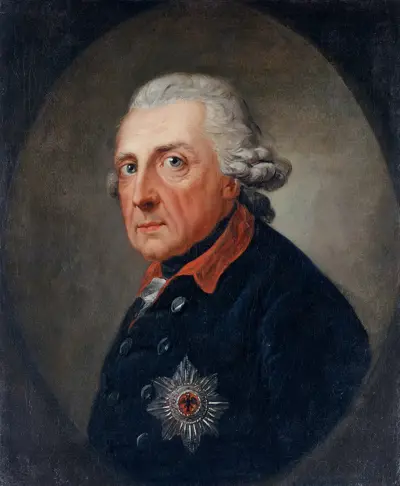
Frederick II was a Prussian king and military leader who ruled the Kingdom of Prussia from 1740 until 1786, reigning longer than any other Hohenzollern king. His most significant accomplishments during his reign included his reorganization of Prussian armies, his military successes in the Silesian wars and the Partitions of Poland, and his patronage of the arts and the Enlightenment. Frederick was the last Hohenzollern monarch titled King in Prussia and declared himself King of Prussia after annexing strategic parts of the Polish–Lithuanian Commonwealth in 1772. Prussia greatly increased its territories and became a leading military power in Europe under his rule. He became known as Frederick the Great (German: Friedrich der Große) and was nicknamed "The Old Fritz" (German: "Der Alte Fritz") by the Prussian people and eventually the rest of Germany.
