David Hume Quotes
Tho' there be no such Thing as Chance in the World; our Ignorance of the real Ccause of any Event has the same Influence on the Understanding, and begets a like Species of Belief or Opinion.
Hume, David. Enquiries Concerning the Human Understanding and Concerning the Principles of Morals. Edited by L. A. Selby-Bigge, 2nd ed., Clarendon Press, 1902, p. 56.


This quotation was from a mathematician who was in the midst of the expansion of mathematics in the late 19th century to include the then rapid and rich development of Probability. This required mathematicians, scientists and others who would use the new mathematics to think in a very different way. For the existing mathematicians his quote clearly states the dilemma for them. Today, scientists and mathematicians have little trouble with “laws of probability” and realize that Probability is governed and controlled in the same way as other fields of mathematics; they are comfortable with different results occurring under the exact same experimental conditions, and those different results are unpredictable in any particular instance, but exactly predictable in terms of frequency of each possible occurrence. This makes Quantum Mechanics rational. However, few non scientists have had their thinking expanded and are comfortable with this thinking. Law and public policy makers are particularly vexed by not being able to think and work in this paradigm where consequences of something can be described for a population precisely, and yet be impossible to describe for any particular individual. This will improve over time, as politicians and other community leaders become better educated mathematically and scientifically.


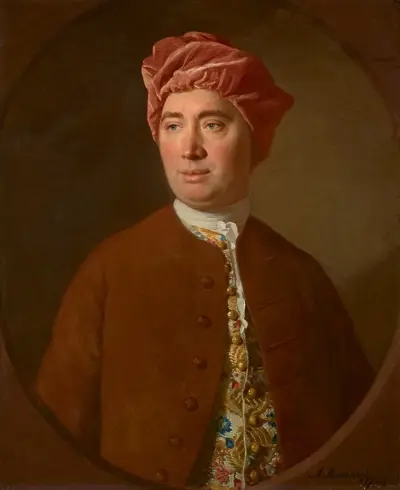
David Hume, Hume strove to create a naturalistic science of man that examined the psychological basis of human nature. Hume argued against the existence of innate ideas, positing that all human knowledge derives solely from experience. This places him with Francis Bacon, Thomas Hobbes, John Locke, and George Berkeley as a British Empiricist.
