Albert Claude Quotes
But, in the name of the experimental method and out of our poor knowledge, are we really entitled to claim that everything happens by chance, to the exclusion of all other possibilities?
Claude, Albert. "Banquet Speech." Les Prix Nobel en 1974, edited by Wilhelm Odelberg, Nobel Foundation, 1975, p. 41.


This quotation was from a mathematician who was in the midst of the expansion of mathematics in the late 19th century to include the then rapid and rich development of Probability. This required mathematicians, scientists and others who would use the new mathematics to think in a very different way. For the existing mathematicians his quote clearly states the dilemma for them. Today, scientists and mathematicians have little trouble with “laws of probability” and realize that Probability is governed and controlled in the same way as other fields of mathematics; they are comfortable with different results occurring under the exact same experimental conditions, and those different results are unpredictable in any particular instance, but exactly predictable in terms of frequency of each possible occurrence. This makes Quantum Mechanics rational. However, few non scientists have had their thinking expanded and are comfortable with this thinking. Law and public policy makers are particularly vexed by not being able to think and work in this paradigm where consequences of something can be described for a population precisely, and yet be impossible to describe for any particular individual. This will improve over time, as politicians and other community leaders become better educated mathematically and scientifically.


Politicians, like many other people, often confuse correlation with causality as few have studied or understand the mathematics of probability.


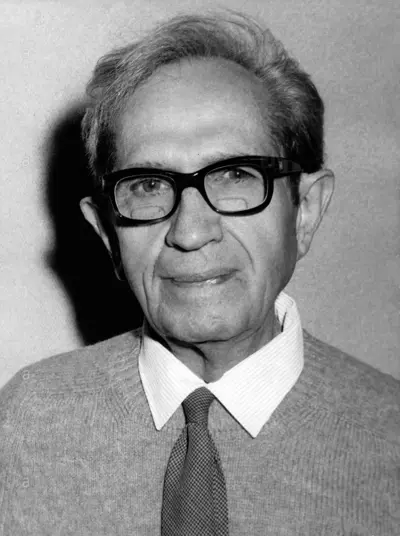
Albert Claude was a Belgian-American cell biologist and medical doctor who shared the Nobel Prize in Physiology or Medicine in 1974 with Christian de Duve and George Emil Palade. His elementary education started in a comprehensive primary school at Longlier, his birthplace. He served in the British Intelligence Service during the First World War, and got imprisoned in concentration camps twice. In recognition of his service, he was granted enrolment at the University of Liège in Belgium to study medicine without any formal education required for the course. He earned his Doctor of Medicine degree in 1928. Devoted to medical research, he initially joined German institutes in Berlin. In 1929 he found an opportunity to join the Rockefeller Institute in New York. At Rockefeller University he made his most groundbreaking achievements in cell biology. In 1930 he developed the technique of cell fractionation, by which he discovered the agent of the Rous sarcoma, components of cell organelles such as mitochondrion, chloroplast, endoplasmic reticulum, Golgi apparatus, ribosome and lysosome. He was the first to employ the electron microscope in the field of biology. In 1945 he published the first detailed structure of cell. His collective works established the complex functional and structural properties of cells.
