John Quincy Adams Quotes
This shuffling trick of misstating the question, and setting up a man of straw to make a pompous demonstration of knocking him down, is the measure of the capacity of [Congressman] Edward Black and of the majority of the House [of Representatives].
1806-1846, States Rights Whig, GA
John Quincy Adams, 1767-1848, 6th President of the United States (Independent, MA), Diary, February 12, 1841
Sourced by: Eigen's Political and Historical Quotations


“Cant” is another word for oratory or speech, but has a manipulative shade to it.


He was referring to the tendency of Arab diplomats and leaders to privately assure U. S. leaders about issues and then go home and make speeches in Arabic completely different from their private assurances and commitments. He advocated ignoring all private statements by Arabs and paying attention only to what they say in their own country and in Arabic. For a good example of an Arab politician doing this, see {585490}.

Many people notice that in the House of Representatives in a debate or a speech the speaker always addresses “Mr. Speaker.” This was the rule voted on by the first House. The purpose was to avoid the legislators shouting at each other and getting into personal arguments and insulting each other. Try it. It’s hard to be angry with someone when you have to argue through a third person.


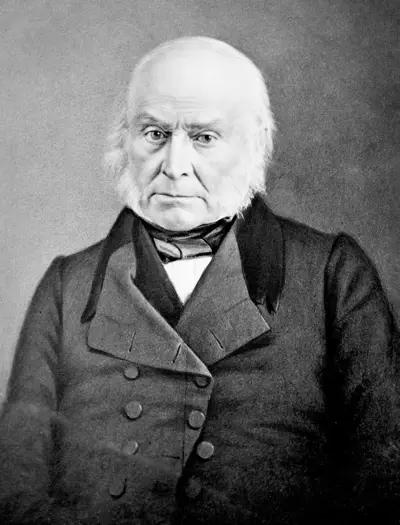
John Quincy Adams was an American statesman, diplomat, lawyer, and diarist who served as the sixth president of the United States, from 1825 to 1829. He previously served as the eighth United States Secretary of State from 1817 to 1825. During his long diplomatic and political career, Adams also served as an ambassador, and as a member of the United States Senate and House of Representatives representing Massachusetts. He was the eldest son of John Adams, who served as the second U.S. president from 1797 to 1801, and First Lady Abigail Adams. Initially a Federalist like his father, he won election to the presidency as a member of the Democratic-Republican Party, and in the mid-1830s became affiliated with the Whig Party.
