L. Ron Hubbard Quotes
If attacked on some vulnerable point by anyone or anything or any organization, always find or manufacture enough threat against them to cause them to sue peace ... Don't ever defend. Always attack.
L. Ron Hubbard, 1911-1986, Founder of Scientology, Novelist, Scientology Policy Letter, August 15, 1960
Sourced by: Eigen's Political and Historical Quotations

This quotation has significance for two reasons. First, Lodge was one of the leaders of the conservative isolationist wing of the Republican Party which generally only wanted to provide the military with weapons to defend the mainland. However, the technology of the airplane caused much rethinking. Americans had seen what German bombing had done to Spanish cities and Italian air power in Ethiopia. This followed by Germany bombing city after city throughout Europe. There were huge calls for antiaircraft guns to be placed around all American cities so that Americans might be defended from air attack. However, Lodge supported another strategy that was a first for America: retaliation. From this point forward, America would rely primarily on retaliation rather than massive defense until President Ronald Reagan proposed his ill-fated Star Wars defense scheme. The second significant factor is that the senator suggested preemption—the attack on a military air base is that threatens us. This appears to be another first.


The “adversary” was Pakistan, which was frequently sending military and terrorist attacks into Kashmire much if which has been disputed by Pakistan ever since the Partition of India in 1949. India had a very disciplined and well led military and like most sophisticated military powers did not immediately retaliate for military incursions despite the public pressure to do so. Instead they gave themselves time to plan and organize the logistics for a series of surgical strikes at the terrorist and/or military concentrations Pakistan had deployed close to the border which they launched several days later.


Announcing that U. S. naval forces would attack German war vessels that entered "American protected waters" despite our not being at war:


He served Presidents Reagan, Clinton, and both Bushes

This statement told the world that the United States might preemptively attack Iraq because the Iraqis were developing nuclear weapons. Bush ordered the invasion of Iraq and there it turned out that was no nuclear program of any type in Iraq. There has been a debate ever since as to whether Bush and his key advisors lied knowingly to justify a war they wanted, wanted the war and pressured the intelligence agencies to warn of a clear nuclear development program, or were duped by incompetent intelligence agencies. While American troops were bogged down in Iraq, North Korea tested a nuclear weapon and Iran announced an enrichment program for weapons grade.

He was a fierce defender of New York City.

His aggressive tactics which had served him so well in the West got his army into trouble at the Second Battle of Bull Run, where he was out maneuvered by Stonewall Jackson and Robert E. Lee. He was sent back to the West.


Nixon was a very aggressive campaigner, with a great flair for smearing opponents. Kennedy had been an intellectual, Ivy League gentlemen type and his brother, his campaign manager, wanted JFK to get down in the mud with Nixon. He was more assertive than usual and didn’t back down, but he did not go for the low blows that had been readied for him.

Umezu was one of several members of the Japanese War Council, that did not want to surrender even after the second atomic bomb destroyed Nagasaki. He and the other hard liners were convinced that the Japanese could inflict such heavy casualties on an invading force of the mainland that the Allies would not insist on unconditional surrender and Japan could negotiate favorable terms. These hard liners had already lived through the firebombing of Tokyo which in casualties was as bad as the atom bomb attacks, and felt that they could maintain a defensive force even if all the major cities of Japan were destroyed. Fortunately for all parties, the Emperor overruled Umezu and the hardliners. Umezu and the other hard liners had personal reasons to want to negotiate terms. They had committed war crimes and did not want to be brought to account. He was tried after the surrender and sentenced to life in prison where he died of cancer after 4 years.

An irony is that Timosheko used German Prussian traditional military strategy to successfully defend against the German invasion of Russia.

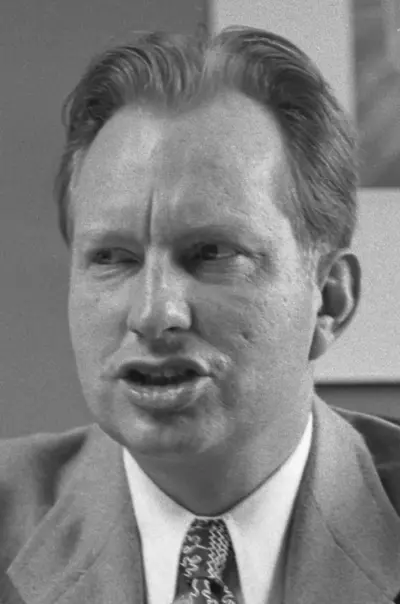
Lafayette Ronald Hubbard was an American author of science fiction and fantasy stories who founded the Church of Scientology. In 1950, Hubbard authored Dianetics: The Modern Science of Mental Health and established a series of organizations to promote Dianetics. In 1952, Hubbard lost the rights to Dianetics in bankruptcy proceedings, and he subsequently founded Scientology. Thereafter Hubbard oversaw the growth of the Church of Scientology into a worldwide organization.
