Friedrich Hayek Quotes
This means that to entrust to science - or to deliberate control according to scientific principles - more than scientific method can achieve may have deplorable effects.
Hayek, Friedrich A. "The Pretence of Knowledge." Nobel Memorial Lecture, 11 Dec. 1974, The Nobel Foundation.


Einstein saw the war as madness but what distressed him most was that his friend and colleague, Fritz Haber, to help the war effort developed poison chlorine gas as a weapon which killed and maimed hundreds of thousands. He was a devoted pacifist thereafter. It took an even greater madman like Adolf Hitler and his Nazis to reach the mental point where he recommended to President Roosevelt that scientists develop an atomic bomb.

One fascinating thing about this quotation is the date. It would be the next 150 years where the great scientific leaps would take place. There was no inkling of computers or nuclear weapons.

Although a conservative Republican, he and most other CEOs of modern companies do not denigrate and ignore science the way many other conservatives have done over the years.

He made this quotation in a discussion about nuclear weapons, but the principle is valid for many areas from the Internet to pharmaceuticals. In the nuclear weapons case there have been a number of accidents – including fatal ones – over the years and on several occasions a nuclear weapon came close to detonating near populated areas. In one case, radiation damage from a crash of a nuclear weapons equipped bomber have made an area in Spain unusable for years into the future.


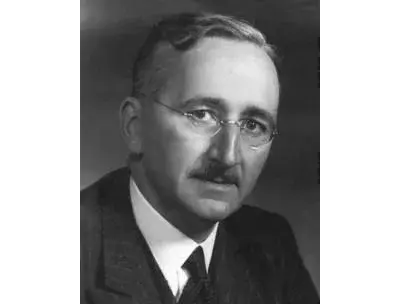
Friedrich August von Hayek CH FBA, often referred to by his initials F. A. Hayek, was an Austrian-British economist and philosopher who is best known for his defence of classical liberalism. Hayek shared the 1974 Nobel Memorial Prize in Economic Sciences with Gunnar Myrdal for his "pioneering work in the theory of money and economic fluctuations and [...] penetrating analysis of the interdependence of economic, social and institutional phenomena". His account of how changing prices communicate information that helps individuals co-ordinate their plans is widely regarded as an important achievement in economics, leading to his Nobel Prize.
