Herodotus Quotes
This king [Sesostris] divided the land among all Egyptians so as to give each one a quadrangle of equal size and to draw from each his revenues, by imposing a tax to be levied yearly. But everyone from whose part the river tore anything away, had to go to him to notify what had happened; he then sent overseers who had to measure out how much the land had become smaller, in order that the owner might pay on what was left, in proportion to the entire tax imposed. In this way, it appears to me, geometry originated, which passed thence to Hellas.
Herodotus. The Histories. Translated by Aubrey de Sélincourt, Penguin Books, 2003, p. 141.


The then Commissioners of the Excise received an Attorney General's opinion that the statement was legally actionable, but they were advised not to sue.


Amen ho tep IV. This Pharaoh adopted a monotheistic religion and imposed it upon Egypt where he could. However, as soon as he died, he was painted as a criminal for the heretical view of monotheism. It is not known whether he came upon the monotheistic concept independently or was influenced by the Jews who had first promulgated the idea. Some argue that Akhenaton was not a strict monotheist because for required the worship of the one God, Aten, but did not ban the worship of the other Egyptian gods though he personally, and his wife Nefertiti, were monotheistic.


Opposing the ratification of the United States Constitution: Left before it ended.

6th Baron Byron. England in the 18th Century was fascinated with Egyptian history, archeology, and art

With the death of the King, she, who was about 21 at the time, was pressured to marry Ay a nobleman and military officer who had acted as a type of regent for the boy king Tutankhamen. She did not want to and wrote this letter to the King of Egypt’s greatest rival—the Hittites. The Hittite King, after much consideration, sent one of his sons to marry the Queen and sit on the throne of Egypt. However, Ay had him murdered before he could reach the Queen, and she finally “agreed” to marry Ay who became the Egyptian Pharoh.


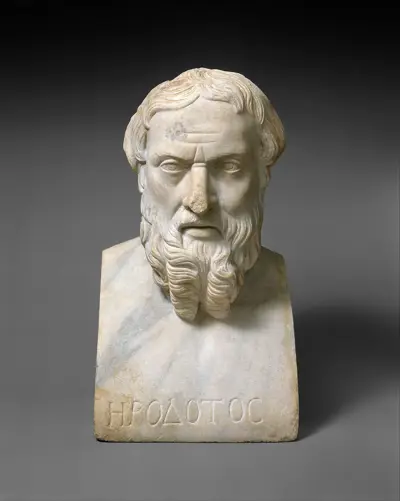
Herodotus (/hɪˈrɒdətəs/; Ancient Greek: Ἡρόδοτος, Hēródotos, Attic Greek pronunciation: [hɛː.ró.do.tos]; c. 484 – c. 425 BC) was an ancient Greek historian who was born in Halicarnassus in the Persian Empire (modern-day Bodrum, Turkey). He is known for having written the book The Histories (Ancient Greek: Ἱστορίαι Historíai), a detailed record of his "inquiry" (Ancient Greek: ἱστορία historía) on the origins of the Greco-Persian Wars. He is widely considered to have been the first writer to have treated historical subjects using a method of systematic investigation specifically, by collecting his materials and then critically arranging them into a historiographic narrative. On account of this, he is often referred to as "The Father of History," a title first conferred on him by the first-century BC Roman orator Cicero.
