Ankhesenamun Quotes
My husband is dead and I have no son, but it is said that you have many sons. If you could send my one of your sons, he could become my husband. On no account will I take one of my own subjects and make him my husband… I am afraid..
With the death of the King, she, who was about 21 at the time, was pressured to marry Ay a nobleman and military officer who had acted as a type of regent for the boy king Tutankhamen. She did not want to and wrote this letter to the King of Egypt’s greatest rival—the Hittites. The Hittite King, after much consideration, sent one of his sons to marry the Queen and sit on the throne of Egypt. However, Ay had him murdered before he could reach the Queen, and she finally “agreed” to marry Ay who became the Egyptian Pharoh.
Ankhesenamun, ~1348 BC– after 1322 BC, Queen of Egypt (Wife & Half Sister of King Tutankhamen), Letter to the Hittite King Suppiluliuma I, 1323 BC
Sourced by: Eigen's Political and Historical Quotations


Amen ho tep IV. This Pharaoh adopted a monotheistic religion and imposed it upon Egypt where he could. However, as soon as he died, he was painted as a criminal for the heretical view of monotheism. It is not known whether he came upon the monotheistic concept independently or was influenced by the Jews who had first promulgated the idea. Some argue that Akhenaton was not a strict monotheist because for required the worship of the one God, Aten, but did not ban the worship of the other Egyptian gods though he personally, and his wife Nefertiti, were monotheistic.


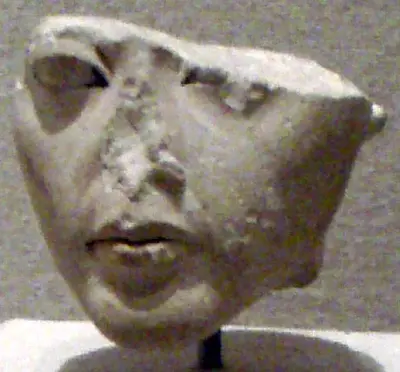
Ankhesenamun (ˁnḫ-s-n-imn, "Her Life Is of Amun"; c. 1348 – after 1322 BC) was a queen who lived during the 18th Dynasty of Egypt as the pharaoh Akhenaten's daughter and subsequently became the Great Royal Wife of pharaoh Tutankhamun. Born Ankhesenpaaten (ˁnḫ.s-n-pꜣ-itn, "she lives for the Aten"), she was the 3rd of 6 known daughters of the Egyptian Pharaoh Akhenaten and his Great Royal Wife Nefertiti. She became the Great Royal Wife of her half-brother Tutankhamun. The change in her name reflects the changes in ancient Egyptian religion during her lifetime after her father's death. Her youth is well documented in the ancient reliefs and paintings of the reign of her parents. Ankhesenamun and her husband Tutankhamun shared the same father, but different mothers. The mummy of Tutankhamun's mother has been identified through DNA analysis as a full sister to his father, Akhenaten, and as a daughter of his grandfather, Amenhotep III. So far his mother's name is uncertain, but her mummy is known informally to scientists as the Younger Lady.
