Stephen Douglas Quotes
This Government was made by our fathers on the white basis ... made by white men for the benefit of white men and their posterity forever.’
Stephen Douglas, 1813-1861, U. S. Congressman & U. S. Senator (Democrat, IL), Debate with Abraham Lincoln, 1858
Sourced by: Eigen's Political and Historical Quotations

Charleston was in the Southern part of the state where most people supported slavery. Douglas made an unequivocal pitch for the racist vote {600060} and forced Lincoln to take a stand. Like many politicians today, Lincoln decided to give the audience what they wanted to hear. It is not clear whether or not he ever believed this statement or was just pandering in a political campaign. He had never said this in the Northern part of the state of before. Lincoln’s views on race changed and matured over the years, culminating in the Emancipation Proclamation. Lincoln lost the Senate seat to Douglas.


Louis Eugene Walcott


In 1911 the citizens of Honea Path, SC, led by Joshua W. Ashleigh, the State Legislator representing the district and his son, the editor of the local newspaper, dismembered and lynched a Black man, Willis Jackson. Some South Carolinians were distressed and asked the Governor to initiate and investigation. See his later statement on lynching in 1930.


The president was commenting on a Donald Trump campaign statement that African American were in the worst shape in history when the reality was just the opposite

This quote illustrates the Southern segregationist view in the Jim Crow South.


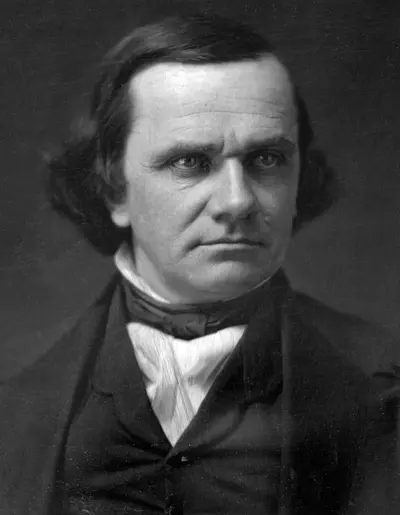
- Born: April 23, 1813
- Died: June 3, 1861
- Nationality: American
- Profession: Politician
Stephen Arnold Douglas was an American politician and lawyer from Illinois. He was one of two Democratic Party nominees for president in the 1860 presidential election, which was won by Republican Abraham Lincoln. Douglas had previously defeated Lincoln in the 1858 United States Senate election in Illinois, known for the Lincoln–Douglas debates. During the 1850s, Douglas was one of the foremost advocates of popular sovereignty, which held that each territory should be allowed to determine whether to permit slavery within its borders. Douglas was nicknamed the "Little Giant" and "Stevie D" because he was short in physical stature but a forceful and dominant figure in politics.
