Dalton Trumbo Quotes
This blacklisting is going to collapse because it is rotten, immoral and illegal. I am one day going to be working openly in the motion picture industry. When that day comes, I swear to you that I will never sign a term contract with any major studio.
His prediction turned out to be accurate, and he went on to write Exodus, Spartacus and many other films. He never signed a studio contract again but worked picture by picture. He and the 9 others refused to answer a Congressional Committee’s questions about their political beliefs and affiliations. Trumbo served a year in jail for Contempt of Congress and then was blacklisted for years, but he was so good that Otto Preminger broke the Blacklist and hired him whereupon he was employed in many of the major films. He had actually won an Academy Award writing under the name of Robert Rich.
Dalton Trumbo, 1905-1976, Screen Writer & Novelist, Member of the Hollywood 10 Blacklist Group, Letter to the King Brothers
Sourced by: Eigen's Political and Historical Quotations


The editorial was in response to Congressional hearings held by J. Parnell Thomas of the House Un-American Activities Committee whereby Hollywood producers and directors were questioned about their political beliefs.

Although the U. S. denied propaganda and dirty tricks efforts interfering in the internal affairs of South American Countries, this memo proves that there were some instances of just that.

This line was used at his trial to show that he had communist tendencies. He and the 9 others refused to answer a Congressional Committee’s questions about their political beliefs and affiliations. Trumbo served a year in jail for Contempt of Congress and then was blacklisted for years, but he was so good that Otto Preminger broke the Blacklist and hired him whereupon he was employed in many of the major films. He had actually won an Academy Award writing under the name of Robert Rich.

The film won 7 Academy Awards including Best Picture. However, the Political Red Scare, Congressional Investigations, McCarthyism, and Hollywood Blacklist intimidated the Movie Studios and executives to avoid anything that was sympathetic to any reform views that the Communists also held, like anti racial discrimination, and empathy for the poor.


The left has always been ambivalent about automation. Many object to it on the grounds that it puts men out of work. However, others such as Lafage, argued that automation was the only economic way to reform the working hours and conditions of labor. The problem at the time was that as long as labor was so cheap, there was no motivation for the manufacturer to invest in better machinery. He and many others argued that minimum wages and their increases increase productivity because it would force manufacturers to invest in more productive equipment to reduce their labor costs.
These work hours, 6 days a week were typical for Russian workers of the time. The Russian workers were ripe for any revolution or reform that promised a better life.
Labor reform was a burning issue in most of the industrialized countries of the world. The two areas that legislation was under consideration all over were working hours and child labor. There were no overtime provisions, employers were free to require workers to work 7 days for as many hours as they wanted. There were no limitations on the use of child labor. This is one of the classic conservative oppositions to these reforms. Ironically to us today, those against reform argued that it was disrespectful of the working man to take away his freedom to work whatever hours he so chose, and it was disrespectful of the workers role as a head of family to decide for him when and under what conditions his children could work. Germany at the time was a very dramatic example of the struggle as the Chancellor was opposed to all labor reform and Kaiser Wilhelm II felt that reforms were needed. The two most powerful Germans were split on this issue as were people in most countries.
Ironically, this was the first “Union Label”. The union wages were being undercut by Chinese workers, but the union refused to allow non-whites into the Union. Had they organized the Chinese workers, history might have been very different. But racism was a destructive force then as it had been and would be later.

Chambers was prescient and to the regret of the right wing, did not listen to him. The reality was that McCarthy, unscrupulous, mentally unstable and an alcoholic intimidated even his own party members and this one sick and flawed individual intimidated and threatened to entire American political establishment. Although Chambers called for the Republican Conservatives to act, it was the liberals of both parties who finally took him on, exposed him and brought him down.

At the time, the mine owners and operators claimed that they had NO obligations to their workers—not even to ensure a safe mine. There was no OSHA and workers died and were maimed on the job much more frequently than they do today. Many mine owners now accept that they have obligations to the workers, and the rest are required to have responsible and safe working conditions by law and OSHA regulations.

He had squads of thugs that he would “rent” out to other gangsters for their enforcement activities and to unions to protect themselves from goons and intimidate non union workers. However, he would not let his men work as goons and strike busters or for companies—despite huge pay offers—to keep their workers in line, a common practice at the time.


The Red Scare had affected much of the country. The House Un-American Activities Committee had frightened much of the country claiming that the Communists had infiltrated the government. But when facts and proof were demanded, all they came up with some workers in the Hollywood film industry who had gone to communist meetings and some who had joined the party before the War when The Great Depression was still plaguing the country. The Hollywood and TV executives caved in to the political demagogues and fired and blacklisted not only the communists but those who refused to testify. The actors and musicians could not work for several years until the country came to its senses, but the screenwriters wrote under false names. At least one Academy award was won that way.

This is a fascinating historical quotation. Karl Marx and Friedrich Engels wrote The Communist Manifesto in 1848 in England and in less than 40 years, American politicians were already in fear of the doctrine. Communism had one of the fastest spreads of any ideology. By 1886 we already see the beginnings of a Red Scare. At the time, most laws were designed to protect the wealthy and the middle class, and many discriminated against workers and the poverty stricken.


The red scare was present in America only 2 years after the Russian Revolution. See {638530} for one of the reasons.
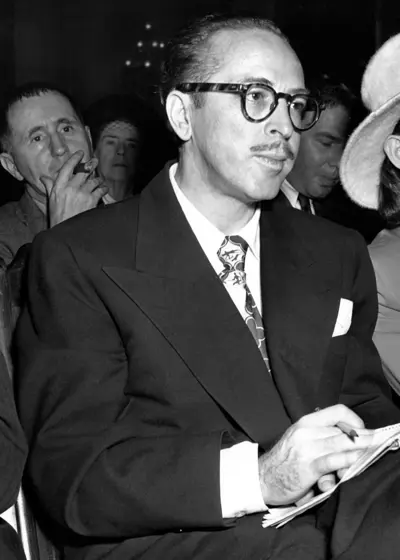
James Dalton Trumbo was an American screenwriter and novelist who scripted many award-winning films, including Roman Holiday (1953), Exodus, Spartacus (both 1960), and Thirty Seconds Over Tokyo (1944). One of the Hollywood Ten, he refused to testify before the House Un-American Activities Committee (HUAC) in 1947 during the committee's investigation of Communist influences in the motion picture industry.
