Jesse Helms Quotes
This bill attempts to make sure that President Clinton is not allowed to do by Executive Order what Congress has declined to enact in the past two congressional sessions namely, to treat homosexuals as a special class protected under various titles of the Civil Rights Act of 1964.
Helms, Jesse. Congressional Record, 105th Cong., 2nd Sess., 1998.


Johnson had proposed an extremely strong civil rights bill. Most Washington insiders assumed that he would gain favor amongst fair minded whites and Blacks for making the attempt, but then he would compromise with the Southerners, and water down the bill to something that had little or no teeth. His staff were trying to learn from Johnson, which aspects of the bill he was willing to compromise on assuming that the President could never get Congress to pass the bill in its original form. They were really surprised at the President’s answer and assumed that he could not do it. They were more surprised when he did drive the bill through Congress without any substantive compromises. It was the most powerful and effective Civil Rights legislation passed since Reconstruction a century earlier.


This was the President’s original role regarding legislation. However, in the 20th century, Presidents have become more active and suggest laws and often initiate the process and then end it by signing the law that he suggested and shepherded through the Congress. But this was never the vision of the Founding Fathers, but since it is not addressed in the Constitution is not an unconstitutional process.


Miller was the Chairman of the House Committee that wrote the bill. The Act allowed women and other workers who were the victims of wage discrimination to sue the discriminating employers even after the statute of limitations and run out provided that they victim had no knowledge of the discrimination. Lilly Ledbetter was a Goodyear Supervisor who was for years paid far less than the male supervisors doing the same work. But the company kept it secret and Ms. Ledbetter didn’t find out until the statute of limitations had said she could no longer sue. The Lilly Ledbetter Act corrected that injustice. President Obama observed that discrimination in pay affects not only the woman or other worker, but also the entire family which might therefor not be able to obtain health care, education or care for elderly parents. At the time that this quotation was made, white women in America who were working full time were earning only 77 percent of what men earned. For minority women, the proportion is even less. As bad as that was, it was an improvement over the situation when the equal pay act was passed 50 years before. Then women earned only 53 percent of what a man did.


Most of the Southern racist members of Congress really did see any demonstration for civil rights as a threat—a threat to the Southern white way of life. And the threat was that most fair minded Americans would be exposed to the evils of segregation and pass Civil Rights legislation. Most of the other members of Congress totally rejected this explanation of why the legislation was being debated. See {637396} .

He was responding to Mississippi Congressman William Colmer-- {637395}. Southern racists frequently accused other members of Congress of being intimidated by civil rights leaders rather than voting for civil rights legislation out of conviction. Many of them, like Colmer, were so insular that revanchist that they did not realize that other whites could really believe that segregation was not a necessary and good thing.


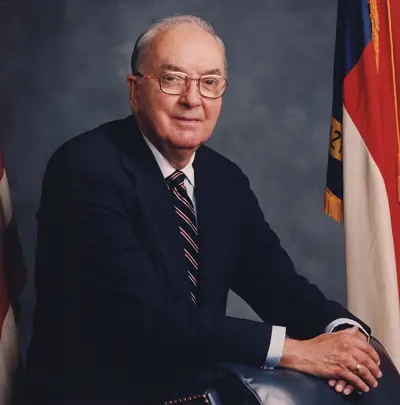
Jesse Alexander Helms Jr. was an American journalist, media executive, and politician. A leader in the conservative movement, he served as a senator from North Carolina from 1973 to 2003. As chairman of the Senate Foreign Relations Committee from 1995 to 2001 he had a major voice in foreign policy. Helms helped organize and fund the conservative resurgence in the 1970s, focusing on Ronald Reagan's quest for the White House as well as helping many local and regional candidates.
