Joseph Addison Quotes
They [the press] consume a considerable quantity of our paper manufacture, employ our artisans in printing, and find business for great numbers of indigent persons.
Joseph Addison, 1672-1719, English Secretary of State (Whig), The Spectator, No. 367
Sourced by: Eigen's Political and Historical Quotations


It is actually true that public works do create indirect jobs, however the efficiency of indirect job creation is not very good. If the government spends $100 on a public works project half might go to construction materials and the rest pays the salary of construction workers. Part of the materials purchase pay the salaries of workers in the supply chain. And most of the salary gets spent on goods and services which helps to pay other workers and thus jobs are created when there is a public works construction project. However the reason FDR did not want this fact to be publicized is because the economic relationships to indirect jobs is counterintuitive. Many people hearing that public works construction also produces jobs say “Well then let us fund many more government public works programs and create even more jobs—keep spending on projects until there is no more unemployment.” However that is not a sustainable strategy. There is enough benefit in the direct jobs and the use of the public improvement, that it was, in FDR’s view, sufficient without “selling” the indirect job creation picture.


Although aggregate employment has remained relatively stable as global free trade has become the U. S. policy, there has been major employment disruption with some types of people benefiting and others like blue collar manufacturing workers having their entire careers wiped out. Port cities like Seattle, Baltimore have boomed while Midwestern manufacturing cities have deteriorated greatly.

This is a statement that in the early 21st century would be made only by ultra liberals. But in the in the late 1940’s this was not only standard democratic party thinking, but a large number of Republicans thought of the Government as the employer of last resort including their Presidential standard bearer.
The country was in the midst of the Great Depression with a huge part of the nation unemployed. President Hoover and the Republicans had refused to provide any direct assistance to the unemployed—there was no unemployment insurance then. They actually believed that there was a danger of corrupting workers by providing assistance and ruining the American workforce. FDR probably saved the nation from massive violence by providing direct help to the unemployed but notice the way that he had to phrase such a notion which was then regarded as radical and socialistic by many conservatives.


Workhouses were factories using unskilled or semiskilled labor established by the government to employ poor people constructively. The problems caused by these were many. The government workhouses competed with private factories, and generally taught no skills so that a poor person could ever escape poverty. Opponents of big government complained that the government was adding millions more people to its employment roles. Conservatives have liked the idea of requiring work for welfare benefits wherever possible, but they do not care for the other problems. America instead has workfare where welfare recipients must work where possible but they work for private firms. This tends to break down when there are no or few priate jobs available as in a recession. The belief that welfare will erode the quality of the work force in general, has proved to be a false notion, but it was widely held in 17th century England and is still held by some people. The problem of work and welfare is a very complicated one.

Small business is responsible for the majority of new jobs that are created in our country.

Mitchell was the first African American to be elected to the United States Congress as a Democrat. The few other Blacks were Republicans from the Reconstruction period after the Civil War. The President was FDR and Mitchell was elected in the midst of the Great Depression.


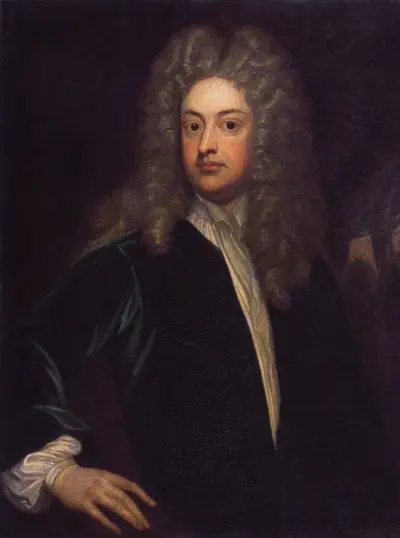
Joseph Addison was an English essayist, poet, playwright and politician. He was the eldest son of The Reverend Lancelot Addison. His name is usually remembered alongside that of his long-standing friend Richard Steele, with whom he founded The Spectator magazine. His simple prose style marked the end of the mannerisms and conventional classical images of the 17th century.
