Langston Hughes Quotes
They [the police] learned something from them Harlem riots. They used to beat your head right in public, but now they only beat it after they get you down to the station house.
Hughes, Langston. Simple Speaks His Mind. Simon & Schuster, 1950, p. 136.


Lincoln had instituted the first draft in American History and it was terribly resented by many Americans. The draft laws allowed the wealthy and upper middle class to avoid service by paying a $300 fee of hiring a substitute just like in the Vietnam War the upper classes could get College Draft deferments. The mob led mostly by poor Irish, began by protesting the draft; then they attacked the mansions and houses of the wealthy; and then they went after Blacks. The Irish poor feared large numbers of Negroes coming out of slavery and competing for their jobs and lowering the prevailing wages. Blacks were beaten and lynched and 5,000 almost half of the then Negro population were driven to Brooklyn, New Jersey and the New York suburbs. It was the worst riot in United States History.

This statement by the police commissioner was very controversial as a major form of police brutality at the time was clubbing citizens with their nightsticks which were much larger and heavier than those used today. However the effect on the police officers was to green light heavy use of the nightstick and soon there was a major incident where the police badly beat many innocent citizens in their quest to control and punish alleged leftists. Whalen was forced to resign. See {626664} and {626663}.
Martin Luther King and his SCLC were demonstrating in St. Augustine, Florida against the segregation in that community. The local law enforcement officers had conspired with the local KKK groups to allow the group to beat the demonstrators and then arrest the demonstrators for disturbing the peace and demonstrating in the face of a local injunction against the demonstrations. Then the local authorities placed huge bail on the arrestees that they could not easily meet. While they were in custody, they were tortured in various ways. Judge Simpson, vacated the injunction and ordered that the demonstrators not be arrested, and if they were for any other crime reasonable bail be required. He also recommended prosecution of the wrong-doers. Remarkably, FBI Director J. Edgar Hoover ordered his agents not to protect the civil rights demonstrators on the grounds that the FBI should not provide protective services. Hoover had a personal hatred of King who he claimed was a Communist, a sex pervert, and a law breaker. The President then threatened the Florida Governor to send Federal Marshalls into St. Augustine if the state could not maintain law and order. The Governor and the Georgia Senators pleaded to stop the demonstrations which were being intensified because King and the Civil Rights Demonstrators were gaining huge sympathy with the general public as a result of the journalists’ reports and Judge Simpson’s findings. The Civil Rights Bill of 1964 was being filibustered by the Southern senators at that time and this was a tactical victory, but some of the civil rights demonstrators were paying a fearful physical price. Judge Simpson died 4 year later, hated by the KKK and other segregationists in Florida. However in time, even the local Floridians came to appreciate the Judge’s role. The graphic shows the Federal Courthouse named in Judge Simpson’s honor.

In the history of America

Instead of standing and saluting as professional athletes have done for decades before games, he kneeled and refused to stand. This caused great public criticism but also some initial support. He was potentially risking his multimillion dollar salary as this technically violated his contract to avoid anything embarrassing to the team. He also donated $1 million to programs in the area that were working to enhance Black/white understanding. Even those who disagreed with his choice of protest defended his right to do so, and after the initial furor, public opinion, while not in agreement about his method, tended to support him for having the courage of his convictions and using his celebrity for a worthy cause. After sensing the public opinion, his team matches his $1 donation. Professional athletes both in the NFL and in other sports then began to do the same as a form of protest for the large, disproportionate, number of black men who were killed, mostly when unarmed, by police. The reference to the “paid leave” was the practice followed by most police departments—usually required by collective bargaining agreements with police unions—of placing police officers accused of committing violations of laws or regulations on paid administrative leave while all the investigations, hearings, and other processes . While this practice protected the rights of those police officers who were not guilty, it ended up paying brutal murders for a some time entire their case was decided or acted upon be the district attorney.


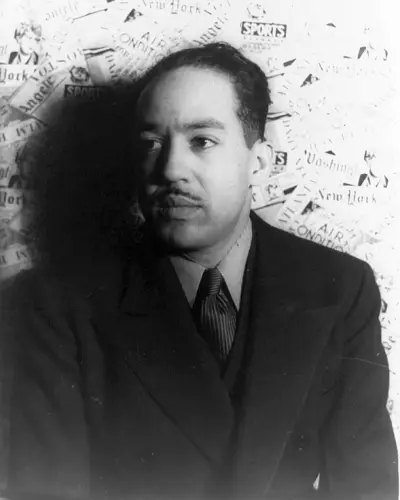
James Mercer Langston Hughes was an American poet, social activist, novelist, playwright, and columnist from Joplin, Missouri. One of the earliest innovators of the then-new literary art form called jazz poetry, Hughes is best known as a leader of the Harlem Renaissance. He famously wrote about the period that "the Negro was in vogue", which was later paraphrased as "when Harlem was in vogue."
