Jean Froissart Quotes
They gathered together without any other counsel, and without any amour saving with staves and knives, and so went to the house of a knight dwelling thereby, and brake up his house and slew the knight and the lady and all his children great and small and brent his house. And they then went to another castle, and took the knight thereof and bound him fast to a stake, and then violated his wife and his daughter before his face and then slew the lady and his daughter and all his other children, and then slew the knight by great torment and burnt and beat down the castle. And so they did to divers other castles and good houses; and they multiplied so that they were a six thousand, and ever as they went forward they increased, for such like as they were fell ever to them, so that every gentleman fled from them and took their wives and children with them, and fled ten or twenty leagues off to be in surety, and left their house void and their goods therein. These mischievous people thus assembled without captain or amour robbed, brent and slew all gentlemen that they could lay hands on, and forced and ravished ladies and damsels, and did such shameful deeds that no human creature ought to think on any such
The French refer to it as the Jacquerie since Jacques was a derogatory name for a peasant since so many men had that as a first name.
Jean Froissart, ~1337-?, French Historian, Description of a French Peasants Revolt, 1358
Sourced by: Eigen's Political and Historical Quotations


A Cossack revolt had broken out in 1707 and was put down by the Czar’s forces. He then issued what might be one of the first official orders for genocide. Few Cossacks survived.

Description of the tactic of terrorism as employed by Attila the Hun. This is one of the first articulate descriptions of the motivation of terror tactics.

The deportations were the massive relocation of Armenians by the Turkish Government in 1915. In the late 19th century some Armenians tried to gain independence and were put down and massacred by the Sultan’s troops. A few decades later Russia battled Turkey. Russian Armenians and Turkish Ottoman Armenians had defected and fought for the Russians who beat the Turks badly. The Turks blamed the traitorous Armenians for the defeat and saw the Ottoman Armenians as a hostile force among them. Many Armenians were brutally massacred. Finally the Turks decided to brutally deport by foot, without sufficient provisions, the Armenians from the critically strategic area they occupied, and a huge number of Armenians died in what has been referred to as the Armenian Genocide. See {51838}, and {61904}.

This quotation distressed many ultra rightists who otherwise were avid followers of Mises. See {632407} for another quotation that distressed many European conservative devotees of Mises.

This was part of the continual conflict between the Muslims and the Eastern Orthodox Christians. The Greeks ended up doubling their territory.


The Christian Crusaders had captured Jerusalem and slaughtered the Muslim civilian inhabitants. In the 21st century, some Islamic terrorists justified the beheading of captured Christian prisoners as revenge for this massive Christian beheading of Muslims almost 1,000 years earlier.

The Hun were a very fierce, Asian people who under Attila, defeated the troops of the Roman Empire and sacked several Italian cities. They fought very intensely and terrorized their enemies. The Kaiser came under great criticism from other European powers from urging his soldiers to emulate vicious barbarians with no sense of Christian morality.
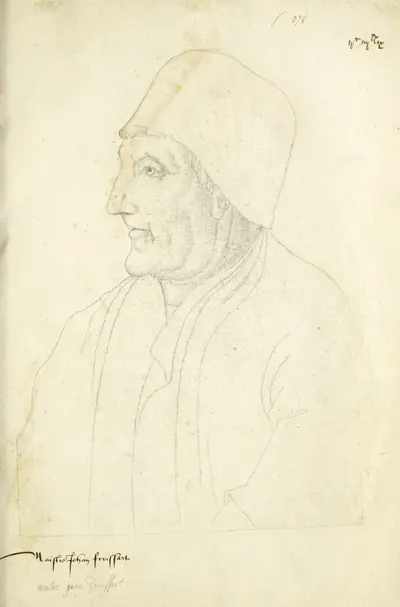
Jean Froissart (Old and Middle French: Jehan, c. 1337 – c. 1405) was a French-speaking medieval author and court historian from the Low Countries who wrote several works, including Chronicles and Meliador, a long Arthurian romance, and a large body of poetry, both short lyrical forms, as well as longer narrative poems. For centuries, Froissart's Chronicles have been recognised as the chief expression of the chivalric revival of the 14th century kingdoms of England, France and Scotland. His history is also an important source for the first half of the Hundred Years' War.
