Dutch West India Company Quotes
These people may travel and trade in New Amsterdam and live and remain there, provided the poor among them shall not be a burden to the Company or to the community, but be supported by their own nation (other Jews).
A boatload of 23 Jews had arrived in New Amsterdam in 1654 from a failed colony in Brazil. Governor Peter Stuyvesant, an anti-Semite, wanted to deport them and asked for permission from his superiors at the Dutch West India Company. The Directors of the company wanted good citizens in their colony, and the Jews had been very productive citizens in Amsterdam. The Governor was distressed and took this as a rebuke which it was. Stuyvesant was not a very good governor eaith from the point of view of the colomists or the company.
Dutch West India Company, Letter to Peter Stuyvesant, Governor of New Ansterdam (The name of New York City under the Dutch and before the English), 1654
Sourced by: Eigen's Political and Historical Quotations

Monroe was then Secretary of State and Jefferson an ex-President.

Similar formal opposition to Jewish parochial schools was more formally voiced later—see American Council for Judaism.


The Tammany Hall leader was very close. In 1934 Fiorello La Guardia, half Italian and half Jewish, was sworn in for the first of his three mayoralty terms.


Unlike the United States where there is great toleration for immigrants to retain their old language and culture, there is an expectation in Germany, France and much of the rest of Europe that immigrants when they come to Germany will act like Germans, dress like Germans, speak German, and follow German social customs.

Parton observed that the United States, by giving legal rights to Jews, set an example which improved the condition of Jews in many countries of Europe. There was much personal Anti Semitism in America then, but there was little difficulty for Jews in dealing and interacting with the government. America’s very existence and success since Independence was observed by much of Europe, and many tended to emulate the United States in some things. For many Europeans, the fact that Jews could be given all the rights of citizenship and nothing adverse was caused by that was the first time they had ever seen what their old cultures had feared for generations. The Papal States and Russia were as officially anti-Semitic as in the past while Sweden had recently given Jews full rights as citizens just as in the United States.


The reform bill was developed by the then current Minister of Education who views were quite opposite to Corkey’s. One of the reforms was to eliminate the Bible Teaching and other religious instructions in the public schools. Then these other undesirables would enroll in the public schools whereas before, the Protestants were able to operate segregated public schools where very few Catholics would attend. The religious bigotry by the Catholics in the South of Ireland was equaled if not exceeded by that of the Protestants in Northern Ireland.


- Born: June 3, 1621
- Nationality:
- Profession:
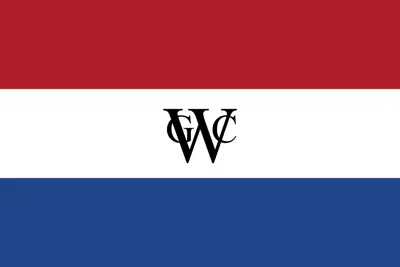
The Dutch West India Company (Dutch: Geoctrooieerde Westindische Compagnie, or GWC; Dutch pronunciation: [ɣəʔɔktroːˈjeːrdə ʋɛstˈɪndisə kɔmpɑˈɲi]; English: Chartered West India Company) was a chartered company of Dutch merchants as well as foreign investors. Among its founders was Willem Usselincx (1567–1647) and Jessé de Forest and the Americas, which included the Pacific Ocean and the eastern part of New Guinea. The intended purpose of the charter was to eliminate competition, particularly Spanish or Portuguese, between the various trading posts established by the merchants. The company became instrumental in the largely ephemeral Dutch colonization of the Americas (including New Netherland) in the seventeenth century. From 1624 to 1654, in the context of the Dutch-Portuguese War, the GWC held Portuguese territory in northeast Brazil, but they were ousted from Dutch Brazil following fierce resistance.
