Joseph C. Wilson Quotes
... there were few forces willing to confront the neoconservative juggernaut and its drive towards war with Iraq. They had mastered the art of marketing their policy prescriptions and were aggressive and intimidating in debate. Their strategy, as I discovered, was to make an opening statement, interrupt the person making a different argument, and then filibuster to the end of a five-minute television segment. That domination of the available time, coupled with aggressively stated talking points and ad hominem attacks on the credibility and intelligence of their interlocutors, was designed to leave viewers with the impression these neocon experts were the only ones who knew what they were talking about. After a while, many of the genuine experts on the region, people who had spent their careers living and working in the Arab world, simply refused to subject themselves to such demeaning behavior and retired to the sidelines.
Wilson was one of the first to realize that there was a group of neoconservatives who were lobbying for an invasion of Iraq and had access at the highest levels of the Bush Administration.
Joseph C. Wilson, U. S. Ambassador to Iraq, Observations of the Neoconservatives who persuaded George W, Bush to invade Iraq, The Politics of Truth, 2004
Sourced by: Eigen's Political and Historical Quotations


35 years earlier Vice President Hubert Humphrey used the same phrase to describe Republican attacks.

Ad hominum attacks are attacks against the person—not his views or arguments against them and not even what he has allegedly done or the consequences of what he has done to others. It is direct character assassination. This is much more effective than trying to argue what wrong has been done. It has been a very common tactic of the Right Wing Republicans and the Tea Party against liberals and supporters if desegregation, and has also been used by extreme leftists in attacking powerful industrialists. When Assange published thousands of State Department cables, many of which exposed the fact that Government officials had been lying to the public and Congress while under oath, there was a massive ad hominum attack on Assange casting aspersions on any information he might claim is real, but never once denying that any of the cables were genuine. The attacks claimed that Assange’s publication would cause American agents throughout the world to be exposed and killed, but even a year after these accusations, neither the State Department nor the intelligence agencies could point to a single case where an American agent had come to harm. The embarrassment was however profound, and some governments were outraged that their confidential dealings with the United State had been exposed to public scrutiny.


Most American politicians and citizens, unlike DeLay, believe that arguing against the opponents’ political philosophy should be done with debate, civil argument, advocacy, speechmaking and writing and not by attacking opponents and confronting them whenever possible. Later, DeLay was convicted and sentenced to jail for money laundering and illegally spending and raising campaign funds. He was also reprimanded by the House Ethics Committee for unethical methods of fund raising for other earlier actions.


He was one of the few people with knowledge about Iraq and their so called WMD program who casted doubt on the CIA and George W. Bush’s “intelligence” that Iraq was about to deploy a nuclear weapon. They anonymously tried to discredit Blix. It was Blix however who turned out to be rights.


Samuel Langhorne Clemens, 1835-1910. Actually, it is loudness and repetition that are the two most persuasive aspects of oratory.


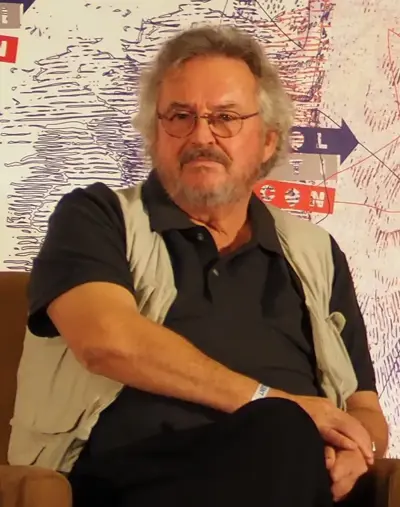
Joseph Charles Wilson IV was an American diplomat who was best known for his 2002 trip to Niger to investigate allegations that Saddam Hussein was attempting to purchase yellowcake uranium; his New York Times op-ed piece, "What I Didn't Find in Africa"; and the subsequent leaking of information pertaining to the identity of his wife Valerie Plame as a CIA officer. He also served as the CEO of a consulting firm he founded, JC Wilson International Ventures, and as the vice chairman of Jarch Capital, LLC.
