Bill Ayers Quotes
There was one moment when J. Edgar Hoover and us had the same distorted lens about who we were - "a real threat," you know? He thought so and we thought so and we were buddies in that regard.
The Weather Underground. Directed by Sam Green and Bill Siegel, The Free History Project, 2002.

Hirsh had uncovered CIA illegal surveillance of anti Vietnam war protesters in the late 1960s. They broke two sets of laws. First, the CIA had no authority to investigate and track American Citizens anywhere but particularly American citizens. Second, the FBI which did have the authority to investigate Americans, were not allowed to use the methods that the CIA did. They violated not only Federal Law and Rules, but also violated the 4th Amendment Rights of thousands of citizens.

Casey continuously violated the law and lied to the President and Congress.


Douglas’ sarcastic dissent in the California Bankers Association case:


In her younger days Steinham worked with the CIA. Originally the Office of Strategic Service, the precursor to the CIA, was an amalgam of some of the nation’s most educated and dedicated people who tended to be very idealistic in saving the world from fascists like Nazi Germany and Japan. The were extremely nonpolitical and were not involved in the liberal conservative battles that the agency got itself into as the Red Scare and the fear of Communism affected much of the society including the CIA.

Kennedy was not being literal, but was sarcastically joking about the overemphasis that J. Edgar Hoover and the FBI leadership was placing on investigating civil rights leaders and communists instead of investigating the hundreds of Southern murders and assaults on civil rights workers and organized crime. The FBI leadership was itself quite racist at the time, and Hoover never wanted to take on organized crime. He did not regard organized crime as an existential threat to the United States (the way he did about civil rights demonstrations) and he feared that with the big money available to organized crime, many of his agents would be corrupted.

Precursor to CIA. During WWII Donovan’s OSS, the FBI and the State Department had the three civilian intelligence organizations while each of the 4 Armed Services had their own intelligence services. Rarely did any of these 7 organizations communicate with any of the others. In the case of the OSS, the FBI and the military services tended to try and obstruct many of their operations. This was the first call for what became the CIA.

This was a critical shortcoming in that the NSA had the personnel for electronic intelligence. It was the major job of the CIA to place human agents—abroad—who could act as spies and/or recruit or manage spies.

This quotation comes as a major surprise to most people who perceive modern CIA as the MAJOR U.S. spying and covert action organization. It is a marvelous case study of agency “mission creep”.

This quotation illustrates a classic problem with the Central Intelligence Agency. Other agencies, like the State Department’s budgets are open and journalists publicize large houses and other high expenditures. The Central Intelligence Agency, in contrast, operates in secret, and there is not the same outside pressure for prudence. In addition to a lack of prudence with CIA expenditure as a result of no public oversight, the other agencies are jealous of the CIA staff and there “perks”.


The American Embassy in Berlin had wiretapped the telephone and telegraph wires of the German Foreign Ministry. The man who did that was hired by Secretary of State Lansing as the first employee of the new unit.
Intelligence agents tend to prefer covert activities to the less dramatic, non-exciting, activity of gathering and analyzing intelligence. Most national intelligence services tend to enlarge their portfolio to include covert activities regardless of what the national leaders intended. Because of the secrecy, they can often get away with this.


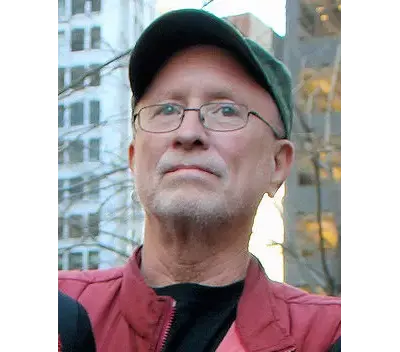
William Charles Ayers is an American elementary education theorist. During the 1960s, Ayers was a leader of the Weather Underground militant group, described by the FBI as a terrorist group, that opposed US involvement in the Vietnam War. He is known for his 1960s radical activism and his later work in education reform, curriculum and instruction.
