Cotton Mather Quotes
There was one civil custom used in (and in few but) the English nation, which this gentleman did endeavour to abolish in this country; and that was, the usage of drinking to one another. For although by drinking to one another, no more is meant than an act of courtesie, when one going to drink, does invite another to do so too, for the same ends with himself; nevertheless the governour considered the impertinency and insignifcancy of this usage, as to any of those ends that are usually pretended for it ; and that indeed it ordinarily served for no ends at all, but only to provoke persons unto, unseasonable and perhaps unreasonable drinking, and at last produce that abominable health-drinking.
Massachusetts Bay Colony Governor John Winthrop
Cotton Mather, 1663-1728, Massachusetts Cleric and Historian, Nehemias Americanus1
Sourced by: Eigen's Political and Historical Quotations


Islam prohibits drinking alcohol. Ataturk was the first Muslim politician not only to drink alcohol, but to do so publicly and make a public toast. Unfortunately he became addicted and died early as a result of his alcoholism. Ironically, to this day, he is used by Turks and other Muslims both as an example of the right to drink alcohol and also by those who appreciate the wisdom of Muhammad in banning alcohol.


The distinction between recreational drinking and heavy drinking is a subtle one and rarely made until modern times. Most leaders who would not have heavy drinkers in positions of responsibility were usually themselves teetotalers and they were very rare. Heavy drinkers and alcoholics have been in positions of responsibility throughout history including modern times—eg House Ways & Means Chairman Wilbur Mills and Russian President Boris Yeltsin. Peter was unusual in that he made the distinction.

Aeneas Sylvius Piccolomini. Early in his career, as Secretary to the Emperor, he was assigned to oversee the education of the young king of Bohemia. Piccolomini’s advice of temperance was not at all based on theological reasons as drinking was rampant, even among the clergy. Also, he recognized the major effect of peer pressure on teenagers as it affects drinking behavior.

Samuel Langhorne Clemens, 1835-1910. The Congressmen who voted for Prohibition in the next century had not read or believed this quotation of Twain’s.


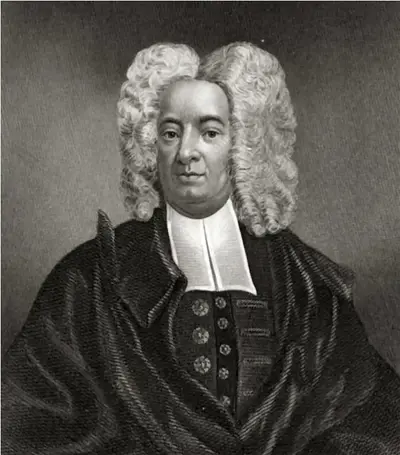
Cotton Mather /ˈmæðər/ FRS was a New England Puritan minister, prolific author, and pamphleteer. One of the most important intellectual figures in English-speaking colonial America, Mather is remembered today chiefly for his Magnalia Christi Americana (1702) and other works of history, for his scientific contributions to plant hybridization and to the promotion of inoculation as a means of preventing smallpox and other infectious diseases, and for his involvement in the events surrounding the Salem witch trials of 1692–3. He also promoted the new Newtonian science in America and sent many scientific reports to the Royal Society of London, which formally elected him as a fellow in 1723. A controversial figure in his own day, he sought unsuccessfully the presidency of Harvard College, which had been held by his father Increase, another important Puritan intellectual.
