Ron Paul Quotes
There should not be any immigration policy. We should welcome anyone who wants to come here.
When he became a national candidate, he flip flopped and modified this position to accommodate the strong anti-immigration preference of most of the Republican right wing base.
Ronald E. Paul, U.S. Congressman (Republican, TX), Libertarian Nominee for President, Position taken in 1988 before he was a candidate for the Republican Presidential nomination in 2007
Sourced by: Eigen's Political and Historical Quotations

between Mexico and the United States The first non-PRI President in over 70 years.


The United States policies at the time encouraged tens of thousands of foreigners to study in America—especially mathematics, science and engineering. Then after they graduate we expel them despite the fact that we have a great labor shortage of these technical skill areas. The result is that the American economy lags in one of its most important areas, high technology for lack of qualified people to fill the jobs. Larger American companies then set up operations overseas and hire many of the people who we kicked out, so they do not pay any taxes to America. The best and most ambitious of these American trained foreigners, then start their own businesses abroad, create many jobs that never benefit Americans and then sell to America competing with American firms. New York City alone had tens of thousands of open jobs at very high salaries for which there were no Americans to fill while the New York schools had trained enough foreigners to fill the jobs, but our national policies forced the best and the brightest to leave and compete with us.


After her ouster for opposing growth limitation proposals:


Ironically, where national quotas have been used in American immigration policy, it has rarely been used to keep nationals of countries with which we were having difficulty, out. In almost all cases, the national quotas have been used to discriminate against racial and religious minorities in America. Asians, Blacks, Hispanics, Catholics, Mormons and Jews have been the most frequent groups targeted. Even when we were in the midst of the Cold War, American policy was to accept immigrants from the Soviet Union and Cuba enthusiastically.
Not all segments of the Republican Party perceived that they needed immigration reform. Some greatly feared more non-whites coming into the country and ending the traditional majority of whites. After the 1964 Civil Rights Bill was passed, almost all the racist Democrats of the “solid South” switched to the Republican Party and the last thing they want is to allow the 11 million mostly Hispanic and/or Black undocumented immigrants to become citizens and vote.


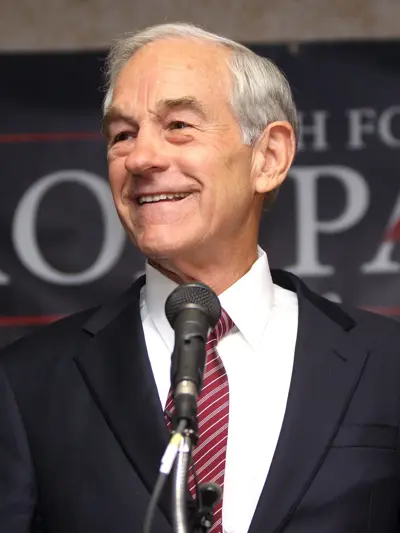
Ronald Ernest Paul is an American author, physician, and retired politician who served as the U.S. Representative for Texas's 22nd congressional district from 1976 to 1977 and again from 1979 to 1985, and for Texas's 14th congressional district from 1997 to 2013. On three occasions, he sought the presidency of the United States: as the Libertarian Party nominee in 1988 and as a candidate for the Republican Party in 2008 and 2012. A self-described constitutionalist, Paul is a critic of the federal government's fiscal policies, especially the existence of the Federal Reserve and the tax policy, as well as the military–industrial complex, the war on drugs, and the war on terror. He has also been a vocal critic of mass surveillance policies such as the USA PATRIOT Act and the NSA surveillance programs. He was the first chairman of the conservative PAC Citizens for a Sound Economy, a free-market group focused on limited government, and has been characterized as the "intellectual godfather" of the Tea Party movement, a fiscally conservative political movement that is largely against most matters of interventionism.
