J. Reuben Clark Quotes
There seems no reason to doubt that such real approval as the Charter has among the people is based upon the belief that if the Charter is put into effect, wars will end... The Charter will not certainly end war. Some will ask - why not? In the first place, there is no provision in the Charter itself that contemplates ending war. It is true the Charter provides for force to bring peace, but such use of force is itself war... It is true the Charter is built to prepare for war, not to promote peace... The Charter is a war document, not a peace document. Not only does the Charter Organization not prevent future wars, but it makes it practically certain that we will have future wars, and as to such wars it takes from us the power to declare them, to choose the side on which we shall fight, to determine what forces and military equipment we shall use in the war, and to control and command our sons who do the fighting
J. Reuben Clark, 1871–1961, U. S. Undersecretary of State (Republican), U. S. Ambassador to Mexico, Reaction to the United Nations Charter, Unpublished Manuscript, 1945
Sourced by: Eigen's Political and Historical Quotations

Theodore Roosevelt was the Presidential nominee. Johnson was a leader of some members of Congress some of whom were extreme isolationists and some of whom were Nazi sympathizers and Hitler admirers. When the Japanese attacked Pearl Harbor later that year, Germany, fulfilling its treaty with Japan, declared war on America, Johnson’s group no longer mattered. Before WWII most Republicans were opposed to Defense Spending and accused the Democrats of being war hawks. After WWII, they flip flopped and became more hawkish than the Democrats who they accused of being soft on defense for years thereafter. See {631380} for President Roosevelt’s different view.


Right wing conservatives were not always in favor of large defense expenditures. Prior to WWII most were opposed to defense spending and they were the pacifists. Clark was one of the few that maintained this view after WWII.


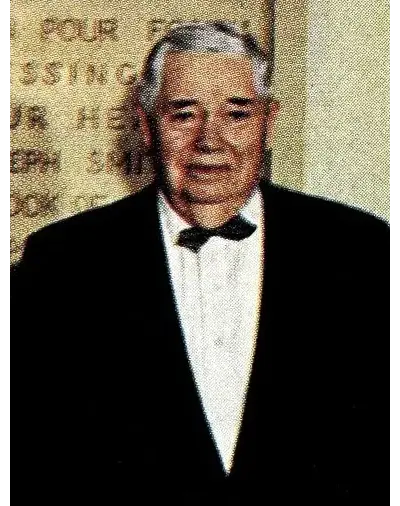
Joshua Reuben Clark Jr. was an American attorney, civil servant, and a prominent leader in The Church of Jesus Christ of Latter-day Saints (LDS Church). Born in Grantsville, Utah Territory, Clark was a prominent attorney in the Department of State, and Undersecretary of State for U.S. President Calvin Coolidge. In 1930, Clark was appointed United States Ambassador to Mexico.
