Samuel Johnson Quotes
There must in every society be some power or other from which there is no appeal.
Samuel Johnson, 1709-1784, English Writer & Lexicographer, Taxation, No Tyranny, 1775
Sourced by: Eigen's Political and Historical Quotations

The assumption of one supreme authority being necessary for a state, has been the most common assumption in almost all cultures and times before the American Revolution. What is amazing is that the Founding Fathers rejected this notion in favor of our complex system of checks and balances restrained by a Constitution which no society had ever tried before. England in contrast as it became more democratic, simply shifted the supreme, uncontrollable entity from the King to the Parliament which it is even today. Parliament can do virtually anything unrestrained by anything except their judgment and tradition.


Originally published as The Cynic’s Word Book


This was a prevailing philosophical view in England and other monarchies. American Founding Fathers were quite familiar with Hobbes’ works and views and many specifically rejected it. Some of the Federalists wanted to extend some of the traditional prerogatives of monarchy to the American Presidency while the Jeffersonian Republican Democrats wanted the executive treated like any, one else before the law. Today that view generally holds, but there is a vestige of the Hobbes’ view still present in things like Executive Privilege.


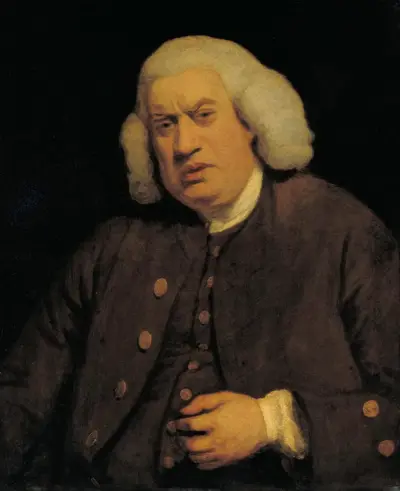
Samuel Johnson, often referred to as Dr Johnson, was an English writer who made lasting contributions to English literature as a poet, playwright, essayist, moralist, literary critic, biographer, editor, and lexicographer. Religiously, he was a devout Anglican, and politically a committed Tory. The Oxford Dictionary of National Biography describes Johnson as "arguably the most distinguished man of letters in English history". He is the subject of James Boswell's The Life of Samuel Johnson, described by Walter Jackson Bate as "the most famous single work of biographical art in the whole of literature".
