Benjamin Franklin Quotes
There is scarce a king in a hundred who would not, if he could, follow the example of Pharoah - get first all the people's money, then all their lands, and then make them and their children servants forever.
Franklin, Benjamin. "Marginalia in Matthew Wheelock's Reflections Moral and Political on Great Britain and Her Colonies (1770)." The Papers of Benjamin Franklin, edited by William B. Willcox, vol. 17, New Haven: Yale University Press, 1973, p. 399.


Power tends to corrupt, and absolute power corrupts absolutely. Great men are almost always bad men.
Perhaps the most famous quotation in all of Political Science is this one. What is fascinating is that 74 years earlier, Shelly, the most famous of the English Poets expressed the same idea in one of his great poems. See {627920}. The last sentence of this quote is often excluded.


What is fascinating about this quotation is that England itself was an aristocracy with a monarchy and very few elements of fairness and equality. The aristocracy and the monarch very much used the system and the common people for their benefit. However, the degree of abuse and tyranny and absence of any sense of equity, shocked even this English aristocrat. Behoof was a Middle English word derived from words that mean to profit from. By the time he used it, it meant benefit or advantage—a slightly wider meaning, but even in 1591 it was not a commonly used words but one used more by the intelligentsia of the day.

This is a variation of the famous Lord Acton quotation: {292904}.


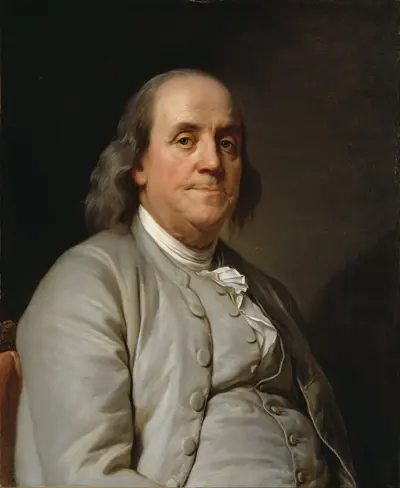
Benjamin Franklin FRS FRSA FRSE was one of the Founding Fathers of the United States. A polymath, he was a leading writer, printer, political philosopher, politician, Freemason, postmaster, scientist, inventor, humorist, civic activist, statesman, and diplomat. As a scientist, he was a major figure in the American Enlightenment and the history of physics for his discoveries and theories regarding electricity. As an inventor, he is known for the lightning rod, bifocals, and the Franklin stove, among other inventions. He founded many civic organizations, including the Library Company, Philadelphia's first fire department, and the University of Pennsylvania.
