James Howard Kunstler Quotes
There is not going to be a "hydrogen economy," and no combination of alternative energy systems or fuels will allow us to continue the suburban pattern. It's finished. We will, however, desperately need to grow more of our food closer to home, and so the preservation of agricultural hinterlands is of great importance. But don't expect the fiesta of suburban construction to continue more than a few more years.
Kunstler, James Howard. The Long Emergency: Surviving the Converging Catastrophes of the Twenty-First Century. Grove/Atlantic, 2005.

He was speaking from retirement. When he was Prime Minister--2001-2005, and active politically, he was in favor of nuclear power for Japan. But after the meltdown of the reactors at Fukishima, he saw happening exactly what the corporation executives running the nuclear power told him could never happen. He aslo supported the claims of American Sailor who had provided much help in the nuclear emergency that they were suffering from deseases brought on by teh excessibe radiation that they encountered.


There are those who worry that we will run out of oil. However, as Khosla observes, the more immediate danger is the pollution of the planet’s air supply by burning fossil fuels like oil in large volumes.


Almost a century later dirty vegetable oils from fast food restaurants were used in Diesel truck and tractor engines very effectively and efficiently.


Most environmentalists limit the vision of their solutions to using less of our precious natural resources which is very important but just as important and perhaps more so in the long run is increasing the supply of these resources. Food is an example. The major reason that there is no serious food shortage world-wide is that we have increased the productivity of agriculture requiring less labor, less water, less fertilizer, less land, and less dependency on weather. Distribution has also improved, but there is no very good way of distributing something for which there is a great shortage.

See {635006} for a slightly earlier French solar engine. Much of the most effective uses of Solar power uses the concentrated heat of the sun to heat water or some other substance like this device. The vast majority of the hot water heaters in Israel function on this principle—no electricity or any other fossil fuel. The only reason that the solar engines of the time were more costly where fuel was available is that no one realized the huge environmental consequence of the fossil fuels. Today we do realize that but do not charge the oil and gas companies and consumers to cover the costs of fixing what we know about and are able to remedy. Solar powered equipment is not a modern invention however and has been with us for well over a century. Paul Collins wrote “He calculated that solar power cost about ten times as much as coal, so that until coal began to run out, solar power would not be economically feasible. But this, to him, was not a sign of failure—there was no question that fossil fuels would indeed run out someday. The great engineer maintained an unshakeable belief in the future of solar power to his last breath; he had set up a large engine in his backyard and was still perfecting it when he collapsed in early 1889. Though his doctor made him rest, Ericsson could not sleep at night: he complained that he could not stop thinking about his work yet to be done.” The only reason that the solar engines of the time were more costly where fuel was available is that no one realized the huge environmental consequence of the fossil fuels. Today we do realize that, but do not charge the oil and gas companies and therefore consumers cover the costs of fixing what we know about and are able to remedy. Solar powered equipment is not a modern invention however and has been with us for well over a century.


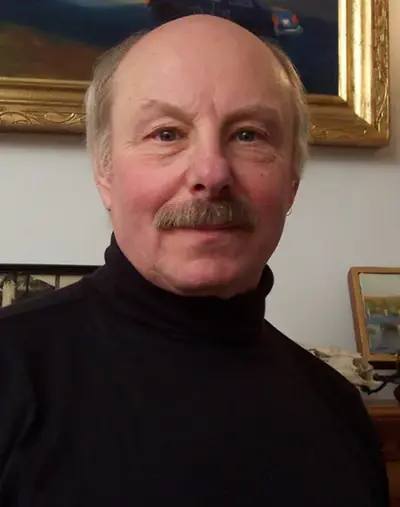
James Howard Kunstler is an American author, social critic, public speaker, and blogger. He is best known for his books The Geography of Nowhere (1994), a history of American suburbia and urban development, The Long Emergency (2005), and Too Much Magic (2012). In The Long Emergency he imagines peak oil and oil depletion resulting in the end of industrialized society, forcing Americans to live in smaller-scale, localized, agrarian (or semi-agrarian) communities. In World Made by Hand he branches into a science fiction depiction of this future world.
