Sinclair Lewis Quotes
There is no greater compliment to the Jews than the fact that the degree of their unpopularity is always the scientific measure of the cruelty and silliness of the regime under which they live.
Lewis, Sinclair. It Can't Happen Here. Doubleday, Doran and Company, 1935.


The irony was that Breen was in charge of the Motion Picture censorship at a time when he personally could block any motion picture from being exhibited by withholding the Hollywood Production Seal of Approval. He was not only a virulent anti-Semitic but prohibited things like scenes with a double bed rather than twin beds for married couples.


The same article denies the fact that the Holocaust ever existed. Al-Akhbar was not just an ordinary newspaper. It is the Egyptian Government’s Official Daily Newspaper—the same Government that was the recipient of the second largest amount of United States foreign aid.


Constantine the Great. Roman Emperors saw Christians as their most dangerous foes. However, Constantine converted to Christianity and ceased the vicious persecution of the Christians. As politicians in many societies need scapegoats to blame for various problems, and the Christians were no longer available, the Jews then became the targeted scapegoats.

Vladimir Lenin. Despite Lenin’s abhorrence of anti-Semitism, there were any other Russians for whom it was normal. After Lenin’s death, Stalin and his henchmen used anti-Semitism to divert attention from the Communist Party’s failure to meet its economic and other goals.


This quotation was uncovered in 2010 when more of the Nixon White House tapes were relaeased. Nixon tended to have the worst stereotyped view of all minority groups.

These kinds of inflammatory sermons are delivered with the approval of the king and royal family who crack down on any cleric who preaches what they do not approve of.


Ford was a notorious anti-Semite.

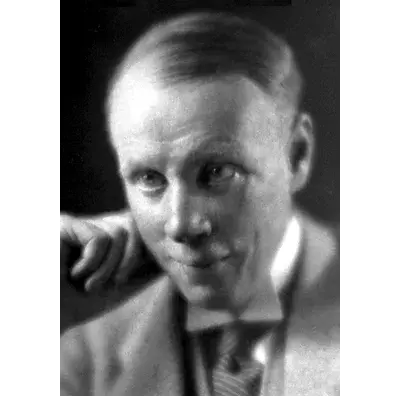
Harry Sinclair Lewis was an American writer and playwright. In 1930, he became the first writer from the United States (and the first from the Americas) to receive the Nobel Prize in Literature, which was awarded "for his vigorous and graphic art of description and his ability to create, with wit and humor, new types of characters." His works are known for their critical views of American capitalism and materialism between the wars. He is also respected for his strong characterizations of modern working women. H. L. Mencken wrote of him, "[If] there was ever a novelist among us with an authentic call to the trade ... it is this red-haired tornado from the Minnesota wilds."
