Wilhelm II, German Emperor Quotes
A Jew cannot be a true patriot. He is something different, like a bad insect. He must be kept apart, out of a place where he can do mischief - even by pogroms, if necessary. The Jews are responsible for Bolshevism in Russia, and Germany too. I was far too indulgent with them during my reign, and I bitterly regret the favors I showed the prominent Jewish bankers.
Röhl, John C. G. The Kaiser and His Court: Wilhelm II and the Government of Germany. Cambridge University Press, 1994, p. 210.


These kinds of inflammatory sermons are delivered with the approval of the king and royal family who crack down on any cleric who preaches what they do not approve of.

Vladimir Lenin. Despite Lenin’s abhorrence of anti-Semitism, there were any other Russians for whom it was normal. After Lenin’s death, Stalin and his henchmen used anti-Semitism to divert attention from the Communist Party’s failure to meet its economic and other goals.


The irony was that Breen was in charge of the Motion Picture censorship at a time when he personally could block any motion picture from being exhibited by withholding the Hollywood Production Seal of Approval. He was not only a virulent anti-Semitic but prohibited things like scenes with a double bed rather than twin beds for married couples.

Ford was a notorious anti-Semite.

Constantine the Great. Roman Emperors saw Christians as their most dangerous foes. However, Constantine converted to Christianity and ceased the vicious persecution of the Christians. As politicians in many societies need scapegoats to blame for various problems, and the Christians were no longer available, the Jews then became the targeted scapegoats.

The girl to which he was referring was President Donald Trump's daughter who married a Jewish man and converted to Judiasm.


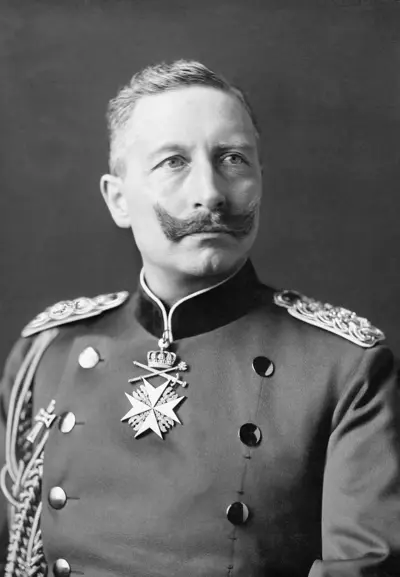
Wilhelm II, anglicised as William II, was the last German Emperor (Kaiser) and King of Prussia, reigning from 15 June 1888 until his abdication on 9 November 1918. Despite strengthening Germany's position as a great power by building a blue-water navy and promoting scientific innovation, his tactless public statements greatly antagonized the international community and his foreign policy was seen by many as one of the causes for the outbreak of World War I. When the German war effort collapsed after a series of crushing defeats on the Western Front in 1918, he was forced to abdicate, thereby bringing an end to the three-hundred-year rule of the House of Hohenzollern.
