Louis D. Brandeis Quotes
There is in essence no difference between a sealed letter and a telephone call.
40 years later privacy rights were afforded to telephone calls
Louis D. Brandeis, 1856-1941, U. S. Supreme Court Justice, Argument that the telephone should have the same privacy protection as the mails, Dissent, Olmstead v. United States, 1928
Sourced by: Eigen's Political and Historical Quotations


While it is true that almost all nations have intelligence agencies and collect intelligence about both friends and foes, our allies did not bug the personal phones of leaders of friendly countries and were very distressed when they discovered that the US NSA had access to the personal calls of world leaders including the leaders of Brazil, Germany and France. Rubio and others believed that they only reason our allies had not done so is that they did not have the technical capability to do so; otherwise they would have been bugging our Presidential and cabinet level phones. President Obama ordered the practice stopped with respect to our allies.
_0_thumbnail_47x47.jpg)


When discussing and planning redistricting What makes this quotation so noteworthy is the fact that to the expert at redistricting, security is so important and E-mail an anathema. The reason is that most redistricting by a majority in a state legislature has little to do with fairness and protecting the meaning of peoples’ votes. It is very often motivated by something that is illegal (eg diluting Black’s voting impact) or untoward, embarrassing and scandalous (eg getting rid of a Congressman the party leaders do not care for—not being ideological enough. Very often, courts or the Justice Department overturn redistricting schemes or the media embarrasses the party who controlled the redistricting. In almost all these cases, the “smoking gun” is the statements or writings of the redistricting leaders. (For an example, see {634844} .)Therefore some redistrictors behave in methods similar to the Mafia, foreign spies, or an illegal monopoly conspiracy.


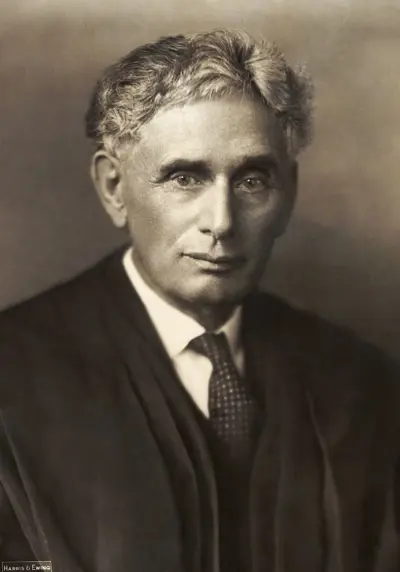
Louis Dembitz Brandeis was an American lawyer and associate justice on the Supreme Court of the United States from 1916 to 1939. He was born in Louisville, Kentucky, to Jewish immigrant parents from Bohemia (now in the Czech Republic), who raised him in a secular home. He attended Harvard Law School, graduating at the age of 20 with the highest grade point average in the law school's history. Brandeis settled in Boston, where he founded a law firm (that is still in practice today as Nutter McClennen & Fish) and became a recognized lawyer through his work on progressive social causes.
