Ito Hirobumi Quotes
There has been, no doubt, a considerable and very rapid change, … as the result of the importation of Western ideas from without by Young Chinese who have been educated abroad and who have returned to their own country not only imbued with Western conceptions, but so greatly estranged from all the old Chinese conceptions that they almost as much lost contact with the Chinese point of view as if they themselves were foreigners by birth.
“Young Chinese” referred to members of a Chinese political party—Young China—consisting mainly of Western-Educated young Chinese who were a strong force for change, but did not have the experience, money, or power connections to unify the country or operate the government. The Japanese watched Chinese politics very carefully as China was seen as a potential rival or a teritory of conquest.
Hirobumi Ito, 1841-1909, Japanese, Prince, Prime Minister, and Head of the Privy Council, 1909
Sourced by: Eigen's Political and Historical Quotations


The Jews and Arabs for years shared Palestine. But the Jews spread out over the world, becoming modern and Westernized in the process. When the Jews returned to Palestine as a part of the Zionist movement, they were more modern, Westernized, and culturally at odds with their old Arab cousins, whose cultures had atrophied. The Arabs resented the Westernized culture that was being introduced into the Middle East. One point of view is that had Israel not tried to introduce moderism and Western ideas into the Middle East, the Jewish State might have been more accepted. However, not only did they bring a foreign perspective (democracy), education and techmology and capitalism to the area, but they far outpassed the Arab nations in agriculture, industry, science, medicine and general standard of living. The Arab dictators and monarchs had always had the excuse for poverty that the land was so poor that it simply could not be developed, but Israel developed the worst of the land in the area with no oil or natural resources. Every day of Israeli prosperity and scientific achievement was an embarassment for the rest of the Middle East where even the rich oil countries were not improving the lot of the average citizen.


Interestingly Western classical music had a philosophical and ideological place in Chinese Communist doctrine. Cho Enlai—the first Chinese Communist Prime Minister was a great philosophical, cultural, and political supporter of Li Delun’s program to spread Western classical music across China. His program and the rigorous training of Chinese musicians in Western classical music and instruments even survived the Cultural Revolution when everything else from the West was attacked. By the 21st century, the best classical musicians in Europe, Canada and the United States included Chinese musicians in almost every instrument and Western musical era.

While this type of modernization had been a theme of her reign, it was particularly fascinating at this time when China had been invaded by Japan and 7 Western Countries, she still argued that the only way for China to thrive and attain true independence was to reform and adopt many Western Ways. Chinese leader after her gave lip service to doing this but never wanted to implement the reforms lest the lose power. Ironically, it was under Communist leader Deng Xiaoping, 1904-1993, that Cixi’s notion of adopting modern Western economic and technological models and approaches was finally implemented and then China made the greatest improvement of any large society ever in a relatively short term. However, Deng stopped short of adopting Western notions of political freedom.


The Title of the Article has often been used to summarize his thesis in this quotation. It has been used so much that most people think that Huntington first originated the phrase and idea. Actually, it was Bernard Lewis. See {636820}


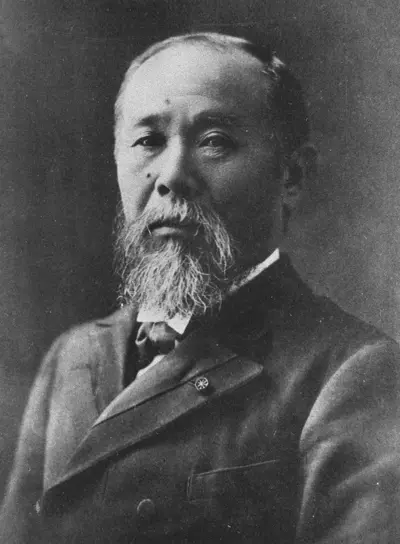
Duke Itō Hirobumi was a Japanese politician and the first Prime Minister of Japan. He was also a leading member of the genrō, a group of senior statesmen that dictated Japan's policies during the Meiji Era.
