Lal Bahadur Shastri Quotes
There comes a time in the life of every nation when it stands at the cross-roads of history and must choose which way to go. But for us there need be no difficulty or hesitation, no looking to right or left. Our way is straight and clear—the building up of a socialist democracy at home with freedom and prosperity for all, and the maintenance of world peace and friendship with all nations.
Shastri, Lal Bahadur. Selected Speeches of Lal Bahadur Shastri, June 11, 1964 to January 10, 1966. Publications Division, Ministry of Information and Broadcasting, Government of India, 1974, p. 5.


The Italian Communists were culturally and ideologically very different from the Russian Communists. The Italian view was a more nationalistic one and was closer to a Socialist Democracy than a “dictatorship of the proletariat”. Much more tolerant of diversity and not as ideological. See {637829} as a big example of the difference. Yet this was still in the midst of the Red Scare in America and some other areas of the West. After WWII, the CIA had secretly spent millions to get Italians to vote for the non-Communist candidates and helped organize Italian anti-Communist politicians who didn’t want the Communists to alter the Italian government to reflect any Communist or Socialist ideas. Meanwhile, the Italian party was under great pressure from Russia and some of the other Communist satellite countries to adopt a hardline revolutionary communist programs. Berlinquer and other Italian Communist leaders had many misgivings about Russian style Communism and they had to play off one side against the other for years.


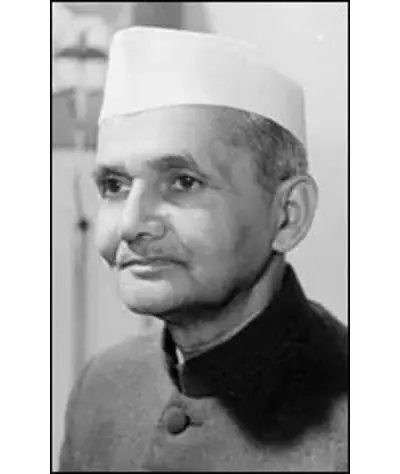
Lal Bahadur Shastri was an Indian statesman who served as the second Prime Minister of India. He promoted the White Revolution – a national campaign to increase the production and supply of milk – by supporting the Amul milk co-operative of Anand, Gujarat and creating the National Dairy Development Board. Underlining the need to boost India's food production, Shastri also promoted the Green Revolution in India in 1965. This led to an increase in food grain production, especially in Punjab, Haryana and Uttar Pradesh.
