Isabel Paterson Quotes
There can be no greater stretch of arbitrary power than is required to seize children from their parents, teach them whatever the authorities decree they shall be taught, and expropriate from the parents the funds to pay for the procedure.
Paterson, Isabel. The God of the Machine. G. P. Putnam's Sons, 1943, p. 258.

This was an amazingly controversial quotation. At first glance it seemed like a typical position that a very conservative, anti-government politicization might take—the government should not interfere with a parents bringing up their children. However, there was a more ominous part of the quotations. While everyone in America would certainly agree with Paul that the Government does not “own” the children, there are few who would agree with the point that follows—that the Parents “own” the child. Paul reveals the normally hidden aspect of his politics—that he is highly influenced by the extreme, Biblical Literalist Fundamentalist Christians and Jews. In the Old Testament, the Father really did OWN the child. The latter was his chattel. A father had the legal and duty-bound power of life and death over his children. Most American Christians and Jews have long since abandoned the literal biblical notion of children being owned by a father and today see a child as a person who can sometimes need the protection of the state just like any other citizen. And there are occasions where the child must be PROTECTED from the parents who may be acting within their fundamentalist notions of Biblical rights and duties, but not with their civil rights and duties. Ownership, of a child is not one of the modern civil rights of parents.


1st Earl of Beaconsfield. This is one of the favorite quotations of those who oppose a strong federal role in education.


The NRA issued regulations making many forms of child labor illegal. Many opposed to the idea, saw it as an attack on the freedom of a parent to decide whether a child would or could work and under what considerations. A father could send his son to work in a dangerous coal mine 12 hours a day and boys grew up never seeing the sun shine. This point of view and “right” of the parent, actually prevailed and the Supreme Court declared the NRA unconstitutional. It took a Constitutional Amendment that passed with overwhelming popularity to allow the government to regulate sweatshops, coal mines and other conditions of child labor. Like most things conservatives opposed, the association of a program or reform with communism traditionally stirred opposition, even to something as benign as child labor regulation.
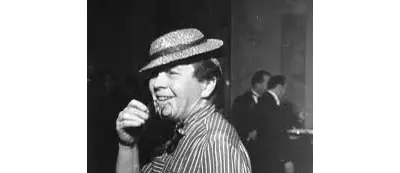
Isabel Paterson was a Canadian-American journalist, novelist, political philosopher, and a leading literary and cultural critic of her day. Historian Jim Powell has called Paterson one of the three founding mothers of American libertarianism, along with Rose Wilder Lane and Ayn Rand, who both acknowledged an intellectual debt to Paterson. Paterson's best-known work, The God of the Machine (1943), a treatise on political philosophy, economics, and history, reached conclusions and espoused beliefs that many libertarians credit as a foundation of their philosophy. Her biographer Stephen D. Cox (2004) believes Paterson was the "earliest progenitor of libertarianism as we know it today." In a letter of 1943, Rand wrote that "The God of the Machine is a document that could literally save the world ... The God of the Machine does for capitalism what Das Kapital does for the Reds and what the Bible did for Christianity."
