Aristotle Quotes
There are still two forms besides democracy and oligarchy; one of them is universally recognized and included among the four principal forms of government, which are said to be (1) monarchy, (2) oligarchy, (3) democracy, and (4) the so-called aristocracy or government of the best. But there is also a fifth, which retains the generic name of polity or constitutional government.
Aristotle. Politics. Translated by Benjamin Jowett, Clarendon Press, 1885, p. 124.


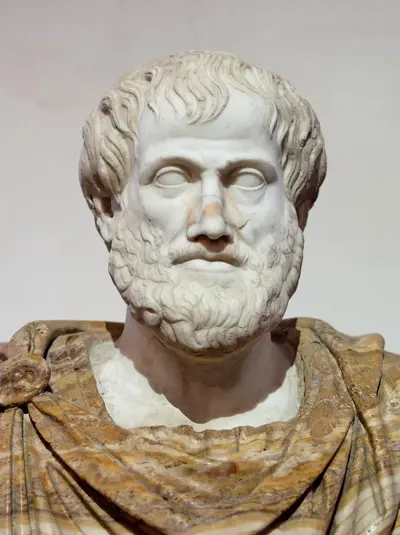
Aristotle (/ærɪˈstɒtəl/; Greek: Ἀριστοτέλης Aristotélēs, pronounced [aristotélɛːs]; 384–322 BC) was a Greek philosopher and polymath during the Classical period in Ancient Greece. Taught by Plato, he was the founder of the Lyceum, the Peripatetic school of philosophy, and the Aristotelian tradition. His writings cover many subjects including physics, biology, zoology, metaphysics, logic, ethics, aesthetics, poetry, theatre, music, rhetoric, psychology, linguistics, economics, politics, meteorology, geology and government. Aristotle provided a complex synthesis of the various philosophies existing prior to him. It was above all from his teachings that the West inherited its intellectual lexicon, as well as problems and methods of inquiry. As a result, his philosophy has exerted a unique influence on almost every form of knowledge in the West and it continues to be a subject of contemporary philosophical discussion.
