Hippocrates Quotes
There are some arts which to those that possess them are painful, but to those that use them are helpful, a common good to laymen, but to those that practise them grievous. Of such arts there is one which the Greeks call medicine. For the medical man sees terrible sights, touches unpleasant things, and the misfortunes of others bring a harvest of sorrows that are peculiarly his; but the sick by means of the art rid themselves of the worst of evils, disease, suffering, pain and death.
Hippocrates. Hippocrates, Volume II. Translated by W. H. S. Jones, Harvard University Press, 1923, p. 227.


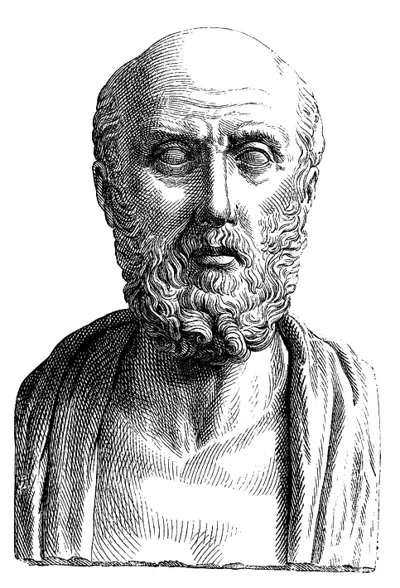
Hippocrates of Kos (/hɪˈpɒkrətiːz/; Greek: Ἱπποκράτης ὁ Κῷος, translit. Hippokrátēs ho Kṓos; c. 460 – c. 370 BC), also known as Hippocrates II, was a Greek physician of the Age of Pericles (Classical Greece), who is considered one of the most outstanding figures in the history of medicine. He is traditionally referred to as the "Father of Medicine" in recognition of his lasting contributions to the field, such as the use of prognosis and clinical observation, the systematic categorization of diseases, or the formulation of humoural theory. The Hippocratic school of medicine revolutionized ancient Greek medicine, establishing it as a discipline distinct from other fields with which it had traditionally been associated (theurgy and philosophy), thus establishing medicine as a profession.
