Andre Malraux Quotes
There are not fifty ways of fighting, there's only one, and that's to win. Neither revolution nor war consists in doing what one pleases.
Malraux, André. Man's Hope. Translated by Stuart Gilbert and Alastair Macdonald, Random House, 1938, p. 118.


In this case, he was referring to the situation with the Barbary Pirates who had an incredible extortion racket going in the Mediterranean. If nations would pay them an annual sum each year, they would not attack and seize merchant ships of that country and sell the ships and goods while holding the sailors for ransom. Jefferson favored and authorized war—a naval attack which for many reasons the European nations had not done (they just paid the tribute). Then a peace treaty was finally signed—the first American Treaty.


Ever since the end of WWII, no major war has been fought where there has been a classic victory where one nation is conquered by another and there is a surrender. Many of the wars have been fought against non-state actors or our war aim is a regime change or the establishment of a more friendly government. We have no desire to occupy the countries generally, and there is often no one “in charge” of the enemy who can even surrender. Bruce was referring to the Iraq War and the Afghanistan War. In each case, despite the lack of a surrender document, it can be said that America won both of these wars initially and then had great trouble with the occupation, the nation building, and keeping the peace. In Iraq and Afghanistan we suffered almost no casualties in the initial invasions. The occupation and “peace” is where we suffered almost all of our casualties.


The highest court in New York.


Not understanding this point has been the cause of much difficulty for military leaders from the war of 1812 through the Iraq war, the success or failure of the effort depended on a successful peace.


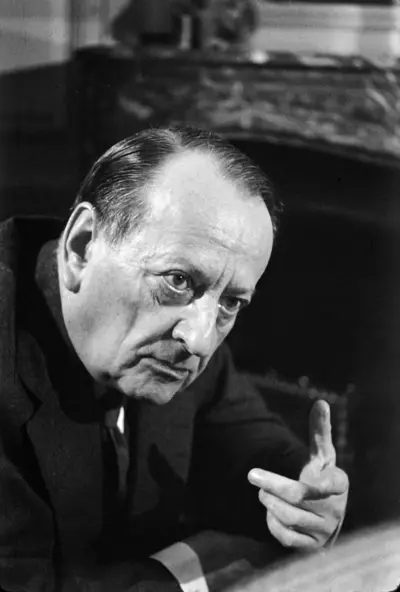
Georges André Malraux DSO was a French novelist, art theorist, and Minister of Cultural Affairs. Malraux's novel La Condition Humaine (Man's Fate) (1933) won the Prix Goncourt. He was appointed by President Charles de Gaulle as Minister of Information (1945–46) and subsequently as France's first Minister of Cultural Affairs during de Gaulle's presidency (1959–1969).
