Arthur C. Brooks Quotes
There are many government takers, some of whom do not know that they are government takers, who just don't want there to be other government takers.
Many corporations getting corporate welfare in the form of subsidies and tax breaks often to not even perceive that they are taking something from the government. They sometimes think that they create jobs and the workers in turn pay taxes to the governments so the subsidies or other benefits that they are getting from government is an "investment" by government. Of course that usually do not perceive it to be a government investment to pay for training for an unemployed worker, or heath care for the poor who in good health might be working. That is welfare.
Arthur Brooks, Director AEI, Interview with Steve Roberts, NPR, The Dianne Rehm Show, WAMU Radio, July 20, 2015, , "
Sourced by: Eigen's Political and Historical Quotations

While this is a common complaint in the American political dialogue at the beginning of the 21st century, it is interesting that this was the conclusion of a foreign political scholar studying that period—one who was generally a great admirer of America.


A libertarian economist, he argued against government subsidies in principle but here observed that our efforts of subsidizing certain industries to keep foreign products.

He was referring to many of the tax earmarks and other tax legislation that in effect give funds to specific organizations or kinds of organizations or for those who engage in certain activities or sometimes just to favorite organziations. A tax credit or deduction is from a balanced budgetary perspective is no different from a subsidy.

This point of of view is actually held by a significant number of conservative Americans. They believe that welfare actually causes the inability of the very poor to get ahead. However, almost no people who have been recipients of welfare, including those who not only emerged from poverty but became wealthy and distinguished, agreed with them. The Congressman was silent about all the companies and wealthy individuals who regularly take corporate welfare and subsidies from the government and who do not seem to be negatively affected.


He was a historian of the United States development of the railroads where government subsidies were massive.
His office was responsible for investigation of public official’s corruption. The law changed as Rakintzis was building cases against several prominent politicians. The Greek task forces to investigate corruption operated on shoestring budgets, however, they had already had a few notable victories in a country that was rarely able to get convictions in the past. The immunity statute in effect negated the anti-corruption initiatives in a country that has historically been riddled with political corruption. See {642277} for the “justification” of the immunity legislation.


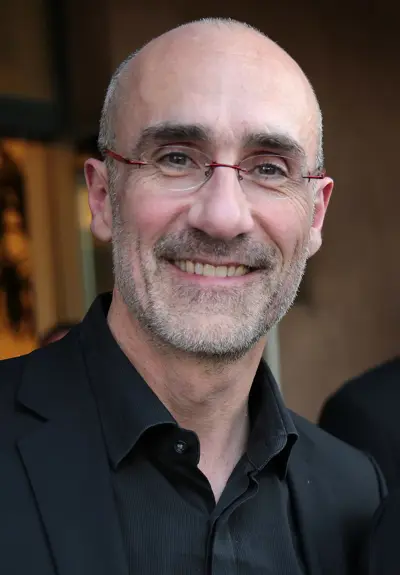
Arthur C. Brooks is an American social scientist, musician, and contributing opinion writer for The Washington Post. He was the president of the American Enterprise Institute, a conservative think tank, for a decade. As of July 2019, he joined the faculty of the Harvard Kennedy School and Harvard Business School. Brooks has researched the junctions between culture, economics, and politics. He is the author of 11 books, including two New York Times best sellers: The Road to Freedom: How to Win the Fight for Free Enterprise (2012) and The Conservative Heart: How to Build a Fairer, Happier, and More Prosperous America (Broadside Books, 2015). Politically, he is a center-right independent and a libertarian.
