David Rothkopf Quotes
There are hugely creative military leaders who have contemplated just the kind of changes that are needed. In Washington, however, strength lies with the opponents rather than the proponents of change. And the opponents possess the ultimate political weapon of mass destruction. They can accuse leaders who want to challenge the status quo of making America weak. So we’re left with all the systems the country has accumulated to counter every post World War II defense challenge: multiple air forces, multiple expeditionary forces; multiple cyber-commands. We can’t afford what we have. We don’t need much of what we have.
David Rothkopf, U.S. Under Secretary of Commerce for International Trade, Executive Editor, Foreign Affairs “Washington’s Sleeping Sickness”, Foreign Policy, May/June 2014
Sourced by: Eigen's Political and Historical Quotations


Hebert was one of the first politicians to formally use the language of “Hawks” and “Doves” to publicly state his views on military matters.


He was objecting to the current crop of senior military officer who have little experience in fighting and much in academic, strategic and technical training. Many however see him as a dinosaur who does not realized the complex nature of the modern military missions. In general, we have won almost all of our fighting battles but often failed in our maintaining civil society, occupation, nation building, military procurement, preventing sexual assault of our own troops by our own soldiers, assuring mental health of our soldiers. Hackworth, detractors argue, wants to change what already works and ignore what does not.

Ataturk, the great Turkish reformer, was interested in Turkish independence, development, and reform, but was uninterested in the day-to-day administration of government. He knew it had to be done and wanted his friend to be Prime Minister and run the government. Orbay realized that Ataturk would still be the major power in the nation.


Rumsfeld wanted Defense Department people running and controlling the civilian government of Iraq after our invasion. General Garner, who was the American appointee to run the civilian government until the Iraqis could have elections wanted State Department, Justice Department and other non military personnel run Iraq.


The Congress wants to keep control of exactly what the Pentagon buys so that each member can try to get more than his fair share of the Federal dollar. But the Congressional budget process is usually slow, and with the recent Congresses they can hardly get anything done. The President nor the Secretary of Defense cannot stop or slow down procurements that are not needed or can be deferred and spend the already appropriated funds on emergency needs for the troops fighting in the field.


Japan was a militarist aggressive state when they started WWII in the Pacific. Their military brutalized China and almost every other country in Asia committing atrocities that those nations still are bitter about today. The unconditional surrender required that their new Constitution prohibit a military. However some of the Conservatives like Abe do not believe that Japan should be the only nation denied a military. Most of the rest of Asia even resents and fears the defense forces that they have and would seriously oppose a reestablishment of a military.

See {615006} for but one example of terrible military money and procurement management.
This was an official publication of the U. S. Army. The First World War had very little affect on future military preparedness At that time conservatives in Congress were very isolationist and military preparedness was not a high priority or even a significant political issue. The Democrats then were more supportive of military spending than the Republicans. It took World War II, for which America was very unprepared, to produce a change in public and political opinion regarding military preparedness.
The US Military was not always strong and at many points in U. S. history Americans did not want a large military feeling that the oceans protected America from invasion and that we should not be involved in wars in the rest of the world. This isolationist sentiment has been existent in America ever since the founding but has gotten stronger and weaker at different periods.
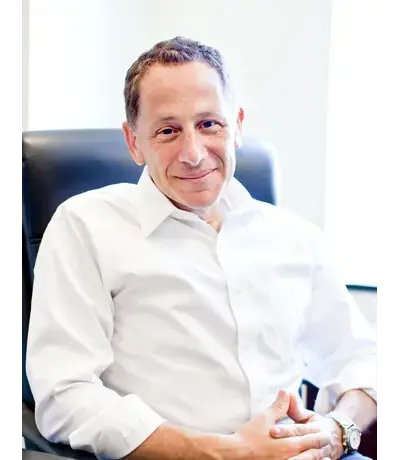
David J. Rothkopf is a professor of international relations, political scientist and journalist. He is the founder and CEO of The Rothkopf Group, a visiting scholar at the Carnegie Endowment for International Peace, a visiting professor at the Paul H. Nitze School of Advanced International Studies at Johns Hopkins University, a prolific author, and podcast host of Deep State Radio.
