Calvin Coolidge Quotes
Theodore Roosevelt was always getting himself in hot water by talking before he had to commit himself upon issues not well-defined
Calvin Coolidge, 1872-1933, 30th President of the United States (Republican, MA), Reflection on TR’s Presidential Style, 1932
Sourced by: Eigen's Political and Historical Quotations


For the first time a woman was running for the presidency and she had a large following. However, there were still many who saw women as too emotional to be in leadership positions. Sarkozy did not want to anger many egalitarian French voters by appearing to be a sexist and attack a woman’s generic ability to lead. However, he cleverly waited for a moment in the debate where his opponent was particularly passionate about something. He gently chided her about it and she took the bait and very passionately and excitedly said that she had a right and obligation to be passionate about issues that affected millions of French lives. But as she did so she grew ever more passionate and forceful. Then Sarkozy struck with this quotation. The impression that the audience was left with is that Royal was a good woman who was properly concerned with issues but was just not ready for such a high position and did not quite have the demeanor that was needed for the Presidency. Sorkozy won the election the following week.


Kennedy hated Roosevelt who had forced him to resign as the U. S. Ambassador to England. Kennedy was an admirer of Mussolini and Hitler. He had allied himself with the part of the British aristocracy that was pro Fascist and opposed Winston Churchill and the democratic element in Britain. Kennedy had opposed aid to Britain to fight Hitler and advised all who would listen that Britain could and would not stand up to Germany. Roosevelt’s support of Britain with Lend Lease and other means proved Kennedy wrong pragmatically and Kennedy’s own statements had forever proved him wrong morally. Although Kennedy opposed our entry in WWII, his sons did not. His oldest son volunteered for a very dangerous mission and was killed. Kennedy blamed his death on Roosevelt {616651} and forever after slandered FDR whenever he got a chance until his son Jack got into politics when his ambition for his son outweighed his hatred.

The majority leader was known for shooting from the hip. He had recently made one incorrect and embarrassing statements. His aide asked him why.

There are two general kinds of human action against their own interest. In the first find, citizens place the nation or the good of the community above their own personal advantage. Every soldier who voluntarily fights is engaging in this type of altruistic behavior. The other is where politicians, democratically elected or imposed offend people in some way. In a democracy people will vote against candidates whose policies are better for the individual, but he is offended by their corruption, immorality, racism, sexism or the like. Richard Nixon was turned on by the vast majority of Americans despite the fact that he presided over national affluence, and had by almost any standard made great breakthroughs in foreign policy. Another example is most of the Arab nations whose citizens support leaders who can and will not improve their standard of living but makes them feel good because they maintain Islamic dignity be opposing the West, even when the opposition itself makes development and growth much more difficult.

Storer was a major Washington socialite who was very influential. Despite his misgivings, the President did appoint Roosevelt.


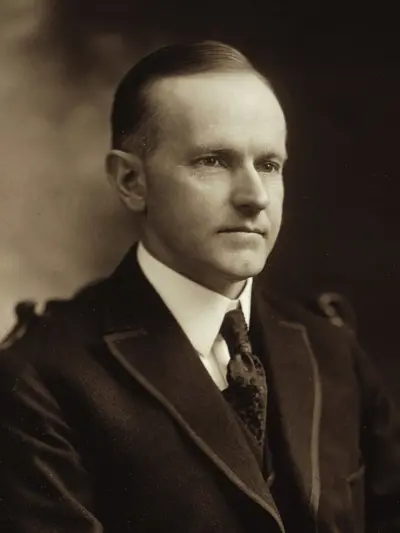
Calvin Coolidge was an American lawyer and politician who served as the 30th president of the United States from 1923 to 1929. A Republican lawyer from New England, born in Vermont, Coolidge worked his way up the ladder of Massachusetts state politics, eventually becoming governor of Massachusetts. His response to the Boston Police Strike of 1919 thrust him into the national spotlight and gave him a reputation as a man of decisive action. The next year, he was elected the 29th vice president of the United States, and he succeeded to the presidency upon the sudden death of Warren G. Harding in 1923. Elected in his own right in 1924, he gained a reputation as a small-government conservative and also as a man who said very little and had a rather dry sense of humor.
