Alexander Haig Quotes
Then came the hostage crisis during which Carter did nothing to rattle the ayatollahs who hung tough until Ronald Reagan was inaugurated, when they suddenly backed down.
Haig, Alexander. Interview on the Middle East. Newsmax, 2002.


The inconsistency of the policy logic of attacking Iraq but not the other two countries of the "axis of evil" caused problems for our British allies who preferred justifying the attack on Iraq on its own merit without any linkage to Iran and North Korea. What made the Iraq invasion even more puzzling was that both Iran and North Korea were greater dangers to the United States and expressed a deep animus.


See {585493},65902, and {585496}, for more quotations on this.

General Gerow was army chief of staff George Marshall’s deputy. President and the Secretary of state or worried that Japan might attack American forces in the Pacific. They thought the Philippines might be in imminent danger. Military intelligence did not agree with their political assessment. So the army temporized by drafting a general alert to all Pacific forces. FDR wanted a more specific war warning sent and the Secretary of War to carry the message. The army did then send a mild warning message to the Philippines as well as other facilities and an even milder message to Pearl Harbor. See {589278}. The commanding general and Admiral of Pearl Harbor paid little attention to the ambiguous message and ten days later the Japanese attacked Pearl Harbor. The Philippines were invaded subsequently.

With promises the success lies in following through and keeping the promise which is usually very costly. A threat that fails meanwhile can be the most expensive thing. We make a threat to deter a foreign power from something. Failure occurs when they are not intimidated and go ahead anyway. Then if we follow through on the threat, that is very costly—a war, a trade embargo, or whatever. Not following through on the threat is the costliest of all as we lose our credibility, trust and honor.

Misha Saakashvili, the President of Georgia, the ex-Soviet State, had a good bit of support in American political circles and decided to start a military conflict with Russia attacking a disputed area whose people had rejected Georgia and preferred the Russian affiliation and control. He was confident that the US would protect him from major retaliation. The Russians first moved troops into the attacked area and then started attacking Georgia military assets. Rice and the Russian Foreign minister were negotiating a cease fire on which they agreed to details and were going to impose them on Georgia. However, Lavrov demanded that Georgia President Saakashvili be deposed. Either nation had the power to do this, and both had in many past instances deposed or overthrown the leaders of other nations—democratically elected or not. This quote is very interesting because in this particular case the United States was stating its idealistic policy and not its “real-politic: that it exhibited in helping to bring down and depose democratically elected in Iran, Chile, Vietnam, Venezuela, Haiti, and others. Ironically, there were many in the US who wanted Saakashvili deposed for unilaterally starting a military conflict Russia that had to involve the U. S.


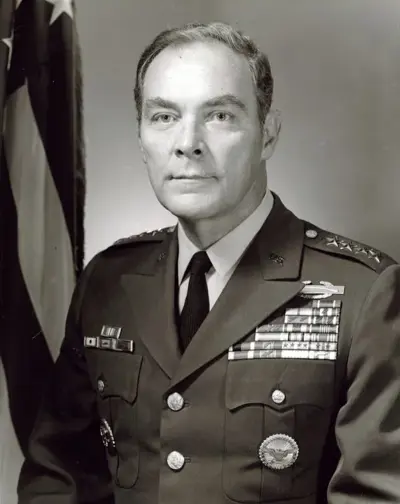
Alexander Meigs Haig Jr. was the United States Secretary of State under President Ronald Reagan and the White House chief of staff under presidents Richard Nixon and Gerald Ford. Prior to these cabinet-level positions, he retired as a general from the United States Army, having been Supreme Allied Commander Europe after serving as the vice chief of staff of the Army.
