Josiah Child Quotes
Their giving great encouragement and immunities to the Inventors of New Manufactures, and the Discoverers of any New Mysteries in Trade, and to those that shall bring the Commodities of other Nations first in use and practice amongst them; for which the Author never goes without his due Reward allowed him at the Publique Charge.
Josiah Child, 1630-1699, English Governor of the East India Company, Explanation of the Dutch system of patent protection that was so successful, Brief Observations Concerning Trade and Interest of Money, 1668
Sourced by: Eigen's Political and Historical Quotations

Many people believe that patents—especially in the high technology arena—actually inhibit innovation.


This is a very important quotation in the Patent world. One of the major justifications for giving patent monopoly to an inventor is that without the patent protection people would not invest time, effort or money to invent things. However many of the great inventors have not agreed. The original Constitutional purpose in granting patents was to stimulate disclosure of technology to other inventors and educate the nation. That is why all patents are public and can be viewed by all.


When Secretary of State, Jefferson ran the first American Patent Office. The Patent system was originally and educational program, not an intellectual property program. Inventors would keep all their technological secrets to themselves. The idea behind the original patent system was to give an inventor a limited monopoly on profiting from his invention in exchange for sharing his information and techniques with his countrymen—thus improving the technological competency of the entire society. The very first patents were available for public inspection for that reason. And even today, copies of patents are available easily for almost no cost. And few American ideas worked as well as our early patent system. Through its educational role and technology transfer, America came from technological nowhere to being the pre-eminent inventing nation of the world. The balance between public access to invention and innovation and preservation of some rights to the creator of intellectual property is key to modern development.


1st Baron Macaulay. The speech was in opposition to the extension of copyright to 60 years after the death of the author. The American Congress in the Digital Millennium Copyright Act did not take his advice and extended the time to 100 years. This was a radical change from the practice of our Founding Fathers who did not allow copyrights at all. America did not join the copyright convention until the 19th century and then for a far shorter period. When corporations started accumulating intellectual property, they made political contributions and hired lobbyists to increase the period of “evil” so they made windfall profits that were not expected.


Note that the only reason given in the constitution for protecting intellectual property was to promote the progress of science and useful arts. Inventors, would keep secret their inventions and techniques of manufacture and use in order to protect their economic interests. No one else would be able to benefit by understanding the invention and taking it further and increasing knowledge and understanding. So the Founding Fathers told Congress to establish a system where inventors would get a guarantee of a reasonable time to profit exclusively from the invention in exchange for making the invention public. The plans, methods and drawings had to be made public and until the 20th century a model of an invention had to be supplied to the Patent Office. Anyone could get an inexpensive copy of any patent and come and study the models. Today, most people believe that the reason for a patent system is to protect the intellectual property of the inventor, but that was not a purpose or even a serious consideration. The reason however was educational and to demystify technology and produce more science and technology which it did.


This would seem a much easier solution to the problem of monopoly holders charging outrageous prices than trying to fix profits or lay a large tax on the profits. However, few governments ever do this. In many cases the patent holders control or heavily influence the government. There is in addition, in most Judeo-Christian societies an assumption that most people have a moral sense and will not take undue advantage of customers just because they have the power to do so. And in the most egregious cases of monopoly pricing there were many other patents where the inventors were not gouging the consumers. It is always been the minority of businesses that have taken gross advantage of patent monopolies. However at some periods, where there was an oligarchy, all the companies in an area abused their patent monopolies together. An example would be the pharmaceutical industry of the early 21st century.


This principle justified the Government in allowing a local Indonesian company to manufacture anti-AIDS drugs without paying licensing rates demanded by the drug companies that held the patents. The principle is that patent rights and the desire to profit should not supersede the rights of people to continue to live because they cannot afford the drugs to keep them alive. The local manufacturers provide the drugs to the government at cost of manufacture which is a tiny proportion of the price the patent owner charges.


He worked for General Electric for over 40 years and held 322 patents. However, it was the corporation that financially benefitted from the monopolies granted by the patents. Our legal system assumes that the creative output of an individual who is an employee is the property of the employer just as the output of the slave was the property of the master.
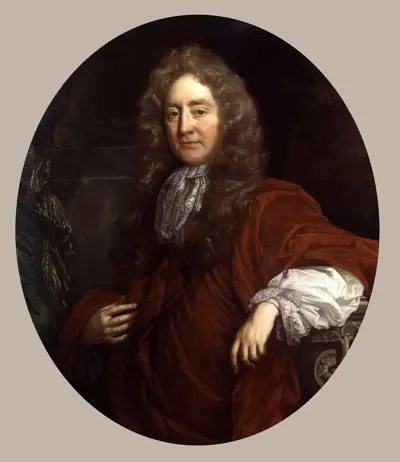
Sir Josiah Child, 1st Baronet, MP, was an English economist, merchant and politician. He was an economist proponent of mercantilism and governor of the East India Company. He led the company in the Anglo-Mughal War.
