Walter Ulbricht Quotes
The West German population would protest passionately if it knew what secret meetings between the federal chancellor, McCoy, and foreign and Nazi generals are planning.
Ulbricht, Walter. Der Fünfjahrplan des friedlichen Aufbaus. Dietz, 1950.

This size standing army which alarmed so many at the beginning of the 20th century, looked very small when compared with the standing army of America a century later. For earlier American Politician’s views on a standing army, see {592824}, {631687}, {622888}, and {641008}.


The problems of Iraq regarding internecine ethnic struggles have not changed in 60 years. See {586486} for another example.


The General’s warning was not taken seriously at the time and the George W. Bush administration made him a persona non grata. But his warning turned out to be very prescient and the United States got so badly bogged down in the Iraq War.

He was announcing the arrest of an agent of the Iranian Government who was plotting to assassinate the Saudi Arabian Ambassador to the United States.


President Ngo Dinh Diem of South Vietnam Diem was a creature of the Central Intelligence Agency. An anti-Communist Christian in a Buddhist county, the CIA engineered his rise to power, created his political party, provided him with cash to bribe other Vietnamese politicians, and paid for all the propaganda so he would “win” the Presidential elections. However, he abused the Buddhists, was thoroughly corrupt and ran a corrupt administration, but worst of all from the American point of view, he was unable to motivate the South Vietnamese population to fight the Communists. He reached the point where he was more of a liability, and the Central Intelligence Agency engineered a coup d’etat to remove him from power and replace him with a President more to our liking. (See {634540}.) Another reason this quotation is important is that it demonstrates the involvement that the Attorney General had with foreign and defense policy. Normally the Attorney General has nothing to do in these areas and is not even in the loop. But Robert F. Kennedy was also the President’s brother, and his advice was sought by President Kennedy on almost all matters. He was probably the most influential attorney general in American history.

American official foreign policy had been officially isolationist—to not get involved in the squabbles and fights of other nations. Angell however pointed out that even before WWII, America had formally been involved in 6 foreign wars and used military incursions on foreign soil on almost 100 occasions.
After the breakup of the Soviet Union, NATO expanded to include some fo the former Soviet Nations thus moving NATO territiry to the East--closer to Russia, whose leaders percieved that the expansion was hostile and dangerous for the indpendence of Russia. What made the situation more complex is that the American Secretary of State, when the Soviet Union was very powerful, had made an agreement with the Soviets that in return for Russian aquiessance of NATO being extended to East Germany, NATO would not expand further West. But after the collapse of the Soviet Union, Russia was quite weak and NATO expanded east despite the earleir comittment. The US and th eother NATO counties took the pozition the previous comitmnts were not binidng as they were never formally signed. The Russians then decided to take a hard line position and flaunt and use military force to which would stop the Western expansion closer to the Russian border.


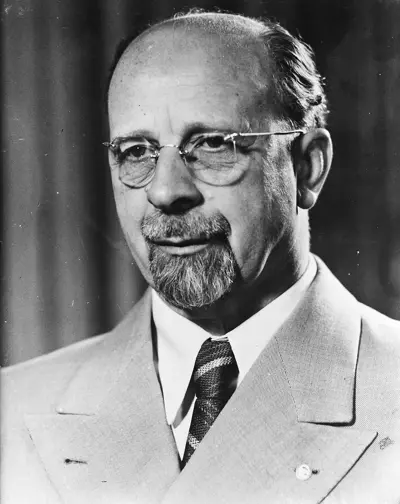
Walter Ernst Paul Ulbricht was a German communist politician. Ulbricht played a leading role in the creation of the Weimar-era Communist Party of Germany (KPD) and later (after spending the years of Nazi rule in exile in France and the Soviet Union) in the early development and establishment of the German Democratic Republic in East Germany. As the First Secretary of the Socialist Unity Party from 1950 to 1971, he was the chief decision maker in East Germany. From President Wilhelm Pieck's death in 1960 on, he was also the East German head of state until his own death in 1973. As the firm leader of the strongest and most important Communist satellite, Ulbricht had a degree of bargaining power with the Kremlin that he used effectively. For example he demanded the building of the Berlin Wall in 1961 when the Kremlin was reluctant.
