Friedrich Engels Quotes
The way in which the vast mass of the poor are treated by modern society is truly scandalous. They are herded into great cities where they breathe a fouler air than in the countryside which they have left.
Engels, Friedrich. The Condition of the Working Class in England. Translated by Florence Kelley Wischnewetzky, Swan Sonnenschein & Co., 1892, p. 97.


Urbanization has often alarmed the power structure. Given the harsher form of urban poverty compared with rural poverty, it was hard for politicians to understand the draw of the cities. They did not then understand the value and importance of greater opportunity, greater privacy and anonymity, more choice and more de facto freedom. Bannerman and many others would have been totally surprised that in the second decade of the 21st century, more than half the people in the entire world were living in cities and suburbs.


Western populists were terribly suspicious of the cities. Note that the migration to cities was noticeable enough to be considered a problem. Better roads and the railroads made relocation easier.


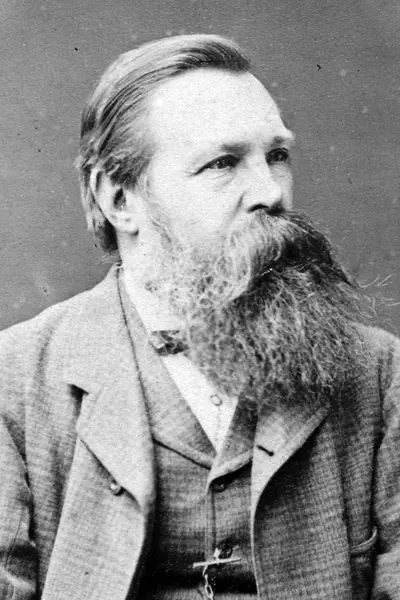
Friedrich Engels (/ˈɛŋ(ɡ)əlz/ ENG-(g)əlz, German: [ˈfʁiːdʁɪç ˈʔɛŋl̩s]), sometimes anglicised as Frederick Engels, was a German philosopher, economist, historian, political theorist and revolutionary socialist. He was also a businessman, journalist and political activist, whose father was an owner of large textile factories in Salford (Lancashire, England) and Barmen, Prussia (now Wuppertal, Germany).
