Betty Williams Quotes
The voice of women, the voice of those most closely involved in bringing forth new life, has not always been listened to when it pleaded and implored against the waste of life in war after war.
Williams, Betty. "Nobel Lecture." NobelPrize.org, Nobel Prize Outreach AB, 11 Dec. 1977.


The suffragette movement was split by WWI and the issue of pacicism. See {621265} for the pro war factional view.


This was a precursor of the total war views of William Tecumseh Sherman and Ulysses S. Grant during the American Civil War half a century later.

Theodore Roosevelt was the Presidential nominee. Johnson was a leader of some members of Congress some of whom were extreme isolationists and some of whom were Nazi sympathizers and Hitler admirers. When the Japanese attacked Pearl Harbor later that year, Germany, fulfilling its treaty with Japan, declared war on America, Johnson’s group no longer mattered. Before WWII most Republicans were opposed to Defense Spending and accused the Democrats of being war hawks. After WWII, they flip flopped and became more hawkish than the Democrats who they accused of being soft on defense for years thereafter. See {631380} for President Roosevelt’s different view.


This was Ford in the middle of his career. As he got older, he changed radically. He was later one of the biggest supporters and admirers of Adolf Hitler and his aggressive militarism.


While Queen Mary was presenting medals to British soldiers during World War I, she said this to a soldier who had exclaimed “No more bloody wars for me”.


Sherman had friends in the South and he saw rebellion and war coming. Most Southerners had a romanticized view of war and were so wrapped up in trying to preserve their economic and cultural way of life that they did not think through the implications of such a war. After and during the war, he was particularly angry with the Southerners who had brought such terrible casualties and destruction upon the land and its people.

His balanced judgment and concern for American Casualties changed during the Iraq War over a decade later where he insisted on taking steady American casualties even after Saddam had been deposed and American troops were in the middle of a sectarian civil war.


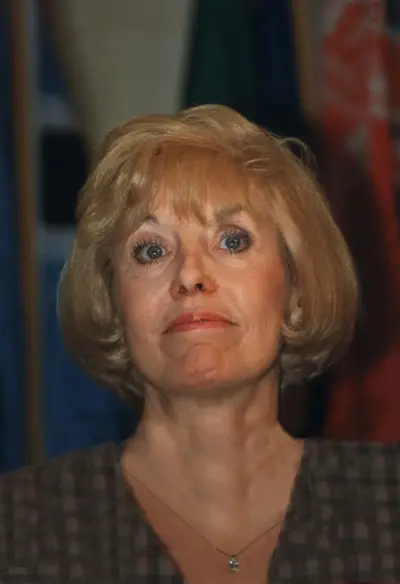
Elizabeth Williams was a peace activist from Northern Ireland. She was a co-recipient with Mairead Corrigan of the Nobel Peace Prize in 1976 for her work as a cofounder of Community of Peace People, an organisation dedicated to promoting a peaceful resolution to the Troubles in Northern Ireland.
