George Wald Quotes
The Vietnamese have a secret weapon. It's their willingness to die beyond our willingness to kill. In effect, they've been saying, You can kill us, but you'll have to kill a lot of us; you may have to kill all of us. And, thank heaven, we are not yet ready to do that.
Wald, George. "A Generation in Search of a Future." The New Yorker, 22 Mar. 1969, p. 30.


In the phone conversation, the President agreed. Where the two ended up diverging was how much military action was required before a political settlement could be negotiated on favorable terms.


This appears to be the origin of the “bear the unbearable” phrase which appeared in many other documents around the Japanese surrender. See {604741}


The “constraints” include an unwillingness to use atomic, chemical and biological warfare; no torture; execution or assassination of all insurgents possible; killing and intimidation of civilians; due process.
Later, when he ran for the Democratic Presidential Nomination had had changed his mind and was a major opponent of the Vietnam War. This was the pattern of so many Americans whose first instinct was to support the government’s decision to wage war, and over time grew disenchanted with the war and ended up opposing the war actively.
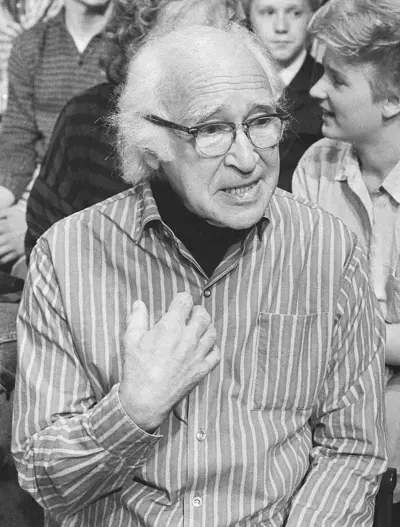
George Wald was an American scientist who studied pigments in the retina. He won a share of the 1967 Nobel Prize in Physiology or Medicine with Haldan Keffer Hartline and Ragnar Granit.
