John Calvin Quotes
The vice or imperfection of men therefore renders it safer and more tolerable for the government to be in the hands of many, that they may afford each other mutual assistance and admonition, and that if any one arrogate to himself more than is right, the many may act as censors and masters to restrain his ambition.
Although a strong advocate of these democratic ideas, he himself exercised various forms of despotic powers of the worst kind including murder and torture when heresy was involved. Nor was Calvin advocating separation of church and state. His argument was that the combined civil and religious government ought to be in the hands of many and not the few or in the extreme case of the Papacy, one.
John Calvin, 1509-1564, Lawyer and Protestant Minister, Founder of Calvinism, On Civil Government and Resistance
Sourced by: Eigen's Political and Historical Quotations


Commenting on the concept of democracy and it's lack of Biblical justification:

The Prime Minister was coping with a scandal where there was an incident where British soldiers had abused Iraq prisoners of war. They were being held to account criminally.


The Army and the other power centers of the country did not appreciate this idea. He was assinated in a coup 4 year later.


She was at the time the European Commissioner for Competition


Although a conservative, he had many iconoclastic ideas. Almost all liberals and Democrats would agree with this quotation, but most conservatives and right wing Republicans support large concentrations of power in corporations and rich individuals.


Referring to the Erdogan government of Turkey. That country elected Erdogan who then turned his back on the Ataturk inspired democracy and instituted many non-democratic policies and practices including jailing civil servants, teachers and journalists who publicly criticize the president or the government.

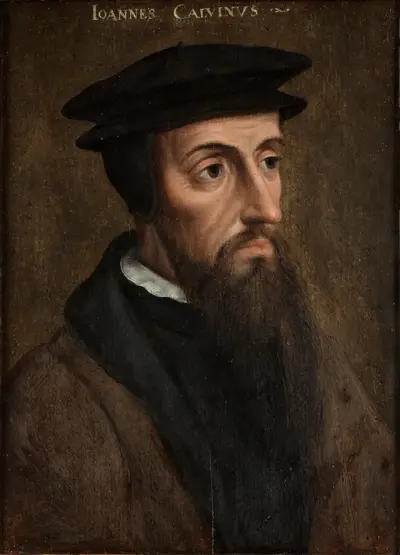
John Calvin was a French theologian, pastor and reformer in Geneva during the Protestant Reformation. He was a principal figure in the development of the system of Christian theology later called Calvinism, aspects of which include the doctrines of predestination and of the absolute sovereignty of God in salvation of the human soul from death and eternal damnation, in which doctrines Calvin was influenced by and elaborated upon the Augustinian and other Christian traditions. Various Congregational, Reformed and Presbyterian churches, which look to Calvin as the chief expositor of their beliefs, have spread throughout the world.
