James B. Clark Quotes
The value of a Representative or Senator increases in proportion to his length of service.
James B. (Champ) Clark, 1850-1921, U. S. Congressman (Democrat, MO), Speaker of the House, My Quarter Century of American Politics, 1920
Sourced by: Eigen's Political and Historical Quotations


Explaining why he did not accept the Vice Presidential nomination of his party:


In 2014 he was accused of money laundering and placed under house arrest by the Russian Government. This typically was the first step in seizing some or all of his assets. When that is done, typically there are local and national politicians who will benefit as they will be able to “buy” the assets from the government at pennies on the dollar.


The Chairmen of the Committees then had tremendous, almost unilateral power. The chairman reached seniority by being elected over and over and had little opposition. At the time they were almost all older Democratic Congressmen from the "Solid South", very conservative and still racists despite the 1964 Civil Rights Act. They were outraged when a Freshmen member of Congress who rarely made a public statement, took on the most powerful members of the House and wanted to reform the Seniority. But Ms. Chisholm was a teacher in her professional life, and by challenging the seniority system and attracting the enmity of most of the Chairmen, the media and the public started to cover the dispute and Chisholm explained to America exactly how the system worked and how undemocratic and racist it was. Her effort put the Seniority System on the public agenda, and reforms evolved over the next decades." She was the first Black woman to be elected to Congress and was the first Black woman to actively campaign for the Presidency


Speaker of the House Thomas Reid is:. The nickname stuck, and Reed was known thereafter as "Czar Reed" by friends and enemies alike.


Since Theodore Roosevelt, the Presidency has become stronger and Congress weaker. The original idea of the framers of the Constitution was to have three co-equal branches of government. However Gingrich was so partisan on this point that he lost most of his credibility and lost his position of leadership in the House. He was constantly asserting the power of the House against Democratic President Bill Clinton while he never had when Republican George W. Bush was President. His house impeached President Clinton on charges emanating from Clinton’s sexual foibles and effort to keep his predilections secret. This not only impeded government for a long time, but angered the public. In the end the Republican Controlled House could not even get a majority of the Republican controlled Senate to vote against Clinton, much less the super-majority the rules required. Ironically, by the second term of George W. Bush’s administration most members of Congress and the American public had thought the Presidency had gotten to powerful relative to Congress and Gingrich’s objective became a national one, but Gingrich himself had been discredited and was completely out of office.
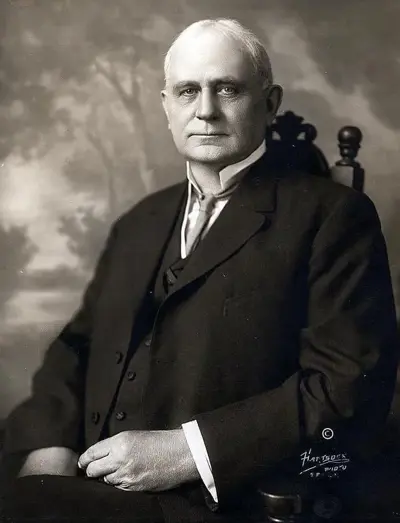
James Beauchamp Clark was an American politician and attorney who represented Missouri in the United States House of Representatives and served as Speaker of the House from 1911 to 1919.
