Noam Chomsky Quotes
The US has been the leading terrorist state in the world for many years.
Chomsky, Noam. Hegemony or Survival: America's Quest for Global Dominance. Metropolitan Books, 2003.


This was true at the time for most nations and their activities—the world was, and was perceived of, as a zero sum game. But with the modern world, much of international activity is not zero sum. In foreign trade both parties to a transaction might win. In scientific research, a win for one nation increases the benefit from all nations who use that research or build upon it.


The quotation is notable as it illustrates the great difficulty that modern democracies have with extreme Islamic fundamentalists. Their very perception and world view is so different that often we think of the extremists as insane and they often feel the same way about us.

See George W. Bush {596316} for the origin of “axis of Evil.

What he does not consider is that a large number of Americans don’t want their government having grand strategies if there is no threat to the United States or no critical national interest. For them crises and threats are all that should occupy our foreign affairs.

Although Great Britain had abolished slavery, British economic interests during the Civil War suffered because of the northern blockade of the South. Much political opinion in England was hostile to the blockade policies of the Union. Bright, a great admirer and supporter of the United Sates and the Union cause was concerned that the United States might drift into War with Great Britain. His letter to Senator Sumner was written with the understanding that it would be in shared with President Lincoln, and it was actually read at a cabinet meeting.


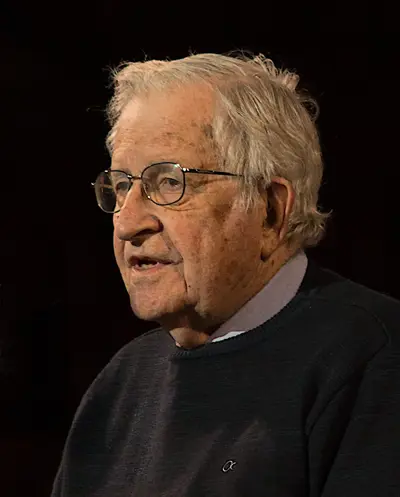
Avram Noam Chomsky is an American linguist, philosopher, cognitive scientist, historian, social critic, and political activist. Sometimes called "the father of modern linguistics", Chomsky is also a major figure in analytic philosophy and one of the founders of the field of cognitive science. He is Laureate Professor of Linguistics at the University of Arizona and Institute Professor Emeritus at the Massachusetts Institute of Technology (MIT), and is the author of more than 150 books on topics such as linguistics, war, politics, and mass media. Ideologically, he aligns with anarcho-syndicalism and libertarian socialism.
