Thomas Browne Quotes
All [countries] cannot be happy at once … because the glory of one state depends upon the ruin of another
This was true at the time for most nations and their activities—the world was, and was perceived of, as a zero sum game. But with the modern world, much of international activity is not zero sum. In foreign trade both parties to a transaction might win. In scientific research, a win for one nation increases the benefit from all nations who use that research or build upon it.
Thomas Browne, 1605-1682, English Physician & Writer, Religio Medici
Sourced by: Eigen's Political and Historical Quotations


In a zero sum system whenever one party gains, the other must lose, and if one loses, the other has a corresponding gain. At other times, legislation was not a zero sum game. Many Congressmen believed that if good legislation would be passed, BOTH parties would benefit as would the country. If poor or no legislation were passed, that would be bad for all.


See Benedict Spinosa for an earlier absense or war view. Also, JFK more recently.

Many of his colleagues were concerned that there were relative power changes in the world and argued that no change should be tolerated by England. However, change is always in process although often it is not noticed until it has advanced and changed the balance of power. The rise of China, India and Brazil in the beginning of the 21st century are an example.

They were both children of Queen Victoria of England.


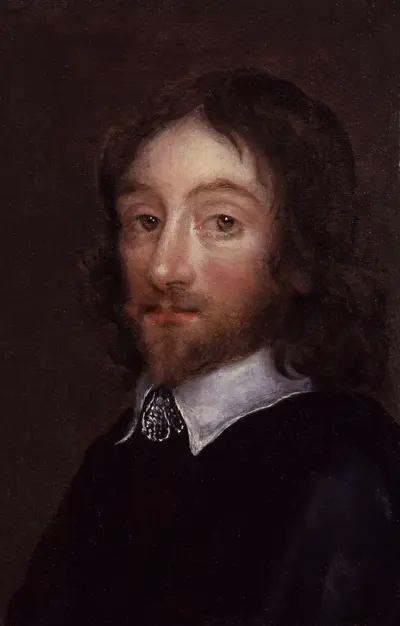
Sir Thomas Browne was an English polymath and author of varied works which reveal his wide learning in diverse fields including science and medicine, religion and the esoteric. His writings display a deep curiosity towards the natural world, influenced by the scientific revolution of Baconian enquiry and are permeated by references to Classical and Biblical sources as well as the idiosyncrasies of his own personality. Although often described as suffused with melancholia, Browne's writings are also characterised by wit and subtle humour, while his literary style is varied, according to genre, resulting in a rich, unique prose which ranges from rough notebook observations to polished Baroque eloquence.
