Condoleezza Rice Quotes
The United States learned a big lesson. Its greatest danger in the world came not from large nations but from failed states.
American Umpire, PBS, September 23, 2016
Sourced by: Eigen's Political and Historical Quotations

He argued to take every statement or threat of violence against America or Americans made by a foreign leader, even if for local political purposes, as a clear and present danger that requires action, often including force to nullify that country's capability to harm America or to produce a regime change. Many point to Adolf Hitler who had, in Mein Kampf, told the world what he would try and do, and few paid any attention to him. On the other hand, when he was at his most dangerous and planning massive world aggression, his rhetoric was very moderate and peaceful. The vast majority of the foreign leaders who threaten America and her interests, never have acted on those threats. However, one danger is the incitement of others in the country or region who might become a threat to America as an individual or a non state terror group.


Hitler ridiculed the letter after receiving it in public speech.


Every major Western power and Japan were looking to control parts of China for their own mercantile advantage. The Emperor, her adopted son, had stated that under no circumstances would the Chinese fight, but Cixi issued this decree, in effect, overruling the Emperor—a remarkable occurrence.


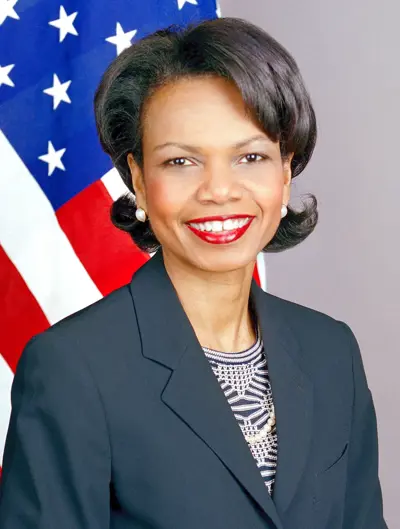
Condoleezza "Condi" Rice is an American diplomat, political scientist, civil servant, and professor who is the current director of the Hoover Institution at Stanford University. Rice served as the 66th United States Secretary of State from 2005 to 2009 and as the 20th United States National Security Advisor from 2001 to 2005. A member of the Republican Party, Rice was the first female African-American secretary of state and the first woman to serve as National Security Advisor. Until the election of Barack Obama as president in 2008, Rice and her predecessor, Colin Powell, were the highest-ranking African Americans in the history of the federal executive branch (by virtue of the secretary of state standing fourth in the presidential line of succession).
