Charles Maurice de Talleyrand Quotes
The United States bonds are safe and free from reverses. They have been funded in such a sound manner and the prosperity of the country is growing so rapidly that there is no doubt of their solvency.
Prince de Benévant. Alexander Hamilton had devised a system of bonds to assume the revolutionary war debt, and, despite the objection of many other politicians like Jefferson, assumed a national debt. But the Untied States was growing and Hamilton’s bonds were so well implemented, that even the sophisticated leaders of Europe were openly admitting that U. S. Bonds were excellent investments and Europeans and other foreigners have been buying American debt ever since.
Charles Maurice de Talleyrand-Perigord, 1754-1838, French Foreign Minister, ~1794
Sourced by: Eigen's Political and Historical Quotations

In 1790 Hamilton, the then Treasury Secretary, proposed a plan whereby the new nation would assume a national debt and bail out the states from their war debt. There was much debate, but Hamilton’s plan prevailed and then succeeded beyond all expectation of even supporters. None the less, Jefferson and some others continued to criticize the plan despite the fact that the country was far better off. What Hamilton had not counted on was the power of ideology and the issue of fairness. Jefferson and some others were ideologically opposed to national debt and even if it had turned out that their fears were wrong, they still opposed in principle, just as Republican ideologists opposed the Clinton tax increase even after the economy boomed and the budget was balanced. Or President’s Bush and Obama implementing the TARP program which saved the nation from a worse recession and likely depression. Nonetheless, there were many who castigated the Presidents of both parties. There are always two negatives about working out of an economic crises: Some people are ideologically opposed to the method of solution, The other problem that is even greater is that some people make money our of the fix and others are hurt worse. It is almost always unfair. Citizens resent that even if the policy solved the economic problem. In Hamilton’s case, speculators had gotten rich at the expense of others during the process, and the inequity bothered many despite the national success. See {619939}, {619930}, {619929}, {619928}.


The economy was terrific under the Republicans and it is always hard to run against a successful economy. However, the lack of meaningful regulation and corporate and financial dominance caused the economy to come crashing down in 1929. See Hoover’s description {603859},


Presidents later when there was a very good economy flaunted the fact as did Harrison. See {641123}. In Harrison’s case, the good times didn’t last very long. In less than a year, the economy collapsed and we had the worst depression in history until the Great Depression came along 4 decades later.

This was a fundamental principle of the Republican party in the middle of the 20th century. However, by the end of that century, Republican doctrine, with the support of the Military-Industrial Complex {641114}, had changed to place defense spending as the highest priority—so much so that the huge deficits created by the massive defense spending weakened the financial solvency that Eisenhower had warned that was more fundamental.


Actually the statement is not literally true though the exceptions are not numerous. People who sold their American common stocks before the 1929 stock market made money. The few people who bet against the U. S. Housing and Mortgage markets before the Meltdown of 2008, made a great deal of money. Over extended long periods, Biden’s statement is true.


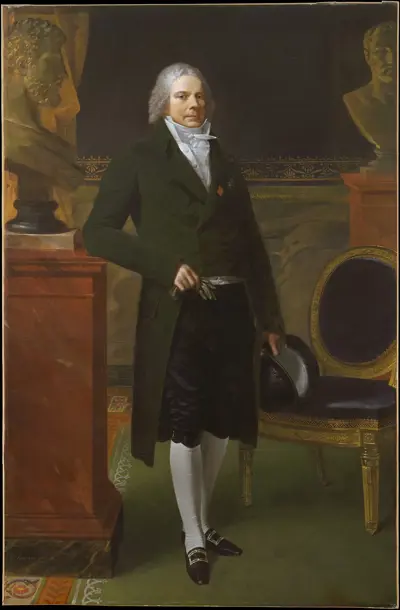
- Born: February 2, 1754
- Died: May 17, 1838
- Nationality: French
- Profession: Clergyman
Charles-Maurice de Talleyrand-Périgord, 1st Prince of Benevento, then Prince of Talleyrand, was a French clergyman and leading diplomat. After studying theology, he became Agent-General of the Clergy in 1780. Just before the French Revolution, he became Bishop of Autun. He worked at the highest levels of successive French governments, most commonly as foreign minister or in some other diplomatic capacity. His career spanned the regimes of Louis XVI, the years of the French Revolution, Napoleon, Louis XVIII, and Louis-Philippe. Those Talleyrand served often distrusted him but, like Napoleon, found him extremely useful. The name "Talleyrand" has become a byword for crafty, cynical diplomacy.
